Travigma Atlas · Vietnam — Landscape & Pilgrimage
The Places Worth the Detour
Some places earn a stop because of what happened there. Others earn it because of what they simply look like, and a few manage both at once. Vietnam's landscape does an unusual amount of narrative work for a country this size - limestone risen out of a sea battle that never happened, a mountain an emperor walked to on purpose, an island that spent decades as a prison and now spends its days mostly empty. None of these places need much introduction once you're standing in them. They need it beforehand, which is the only point of what follows.
Ninh Bình: Trang An and Tam Cốc
Ninh Bình gets called Ha Long Bay's inland cousin often enough that the comparison undersells it. The karst scenery is the same limestone formation, risen from the same geological history, except here it's reached by a sampan rowed by hand through cave tunnels rather than a cruise deck. Trang An and Tam Cốc both move at the pace of the person rowing, which is slower than any engine, and the cave passages mean the boat disappears from daylight every few minutes before surfacing into another stretch of river walled in by the same green-grey cliffs. Mua Cave's viewpoint, reached by several hundred stairs rather than a rope or a guide, empties out after four in the afternoon, once the tour groups have moved on to their next stop and the summit belongs to whoever's still there.

Yên Tử
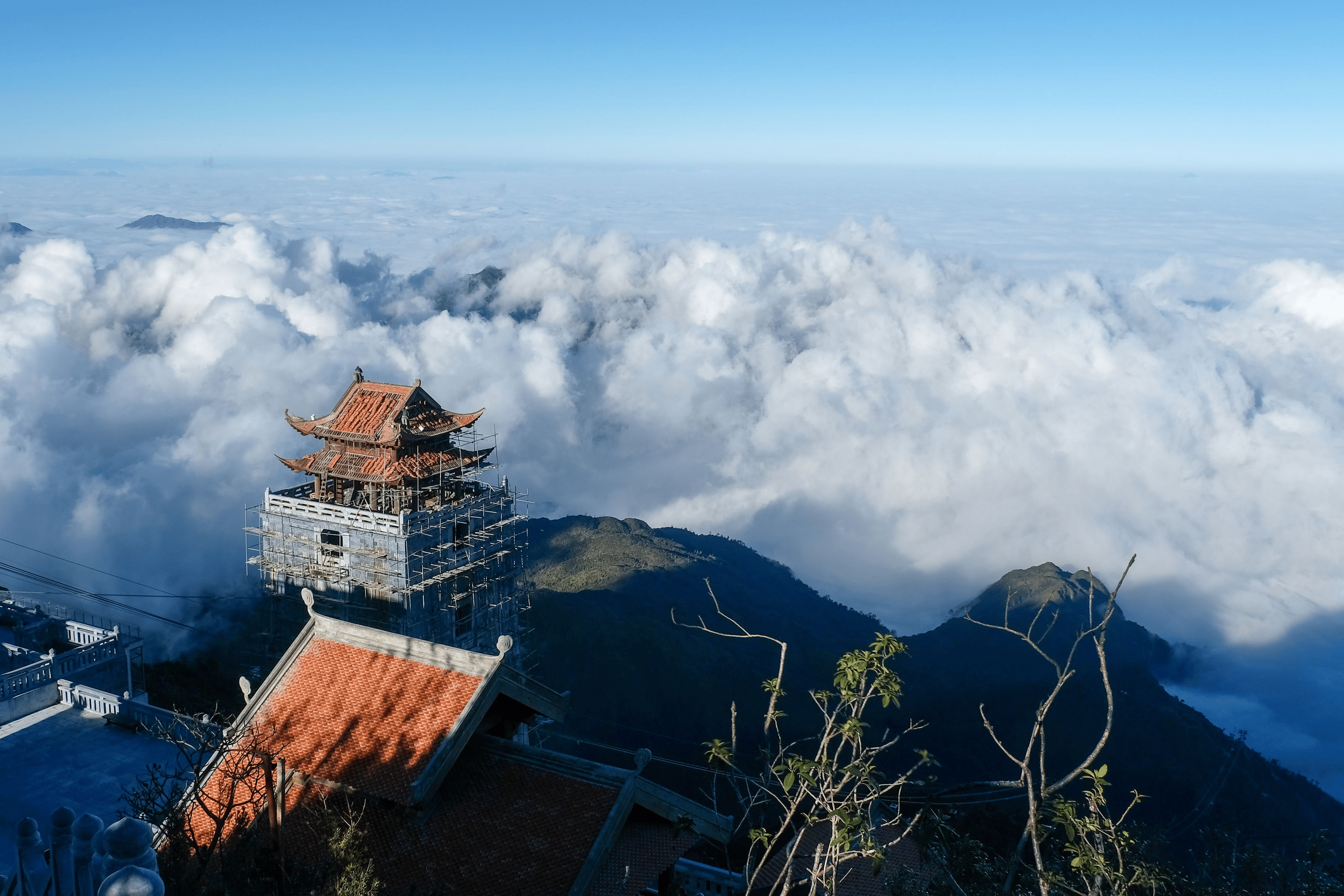
In 1299, a Vietnamese emperor gave up his throne and walked up a mountain. Trần Nhân Tông, who had already led Đại Việt through two successful wars against Mongol invasion, abdicated at the height of his power and climbed Yên Tử to become a monk, founding what's now known as the Trúc Lâm school of Vietnamese Zen Buddhism from a mountaintop far from the throne he'd walked away from. The mountain has drawn Buddhist pilgrims ever since, a cable car now covering some of the ascent, a network of monasteries and pagodas covering the rest. Whatever a visitor's reason for climbing, the story underneath it is a specific, verifiable act of a man giving up power on purpose, which is rarer in recorded history than almost anything else on this list.

Ha Long Bay and Lan Ha Bay
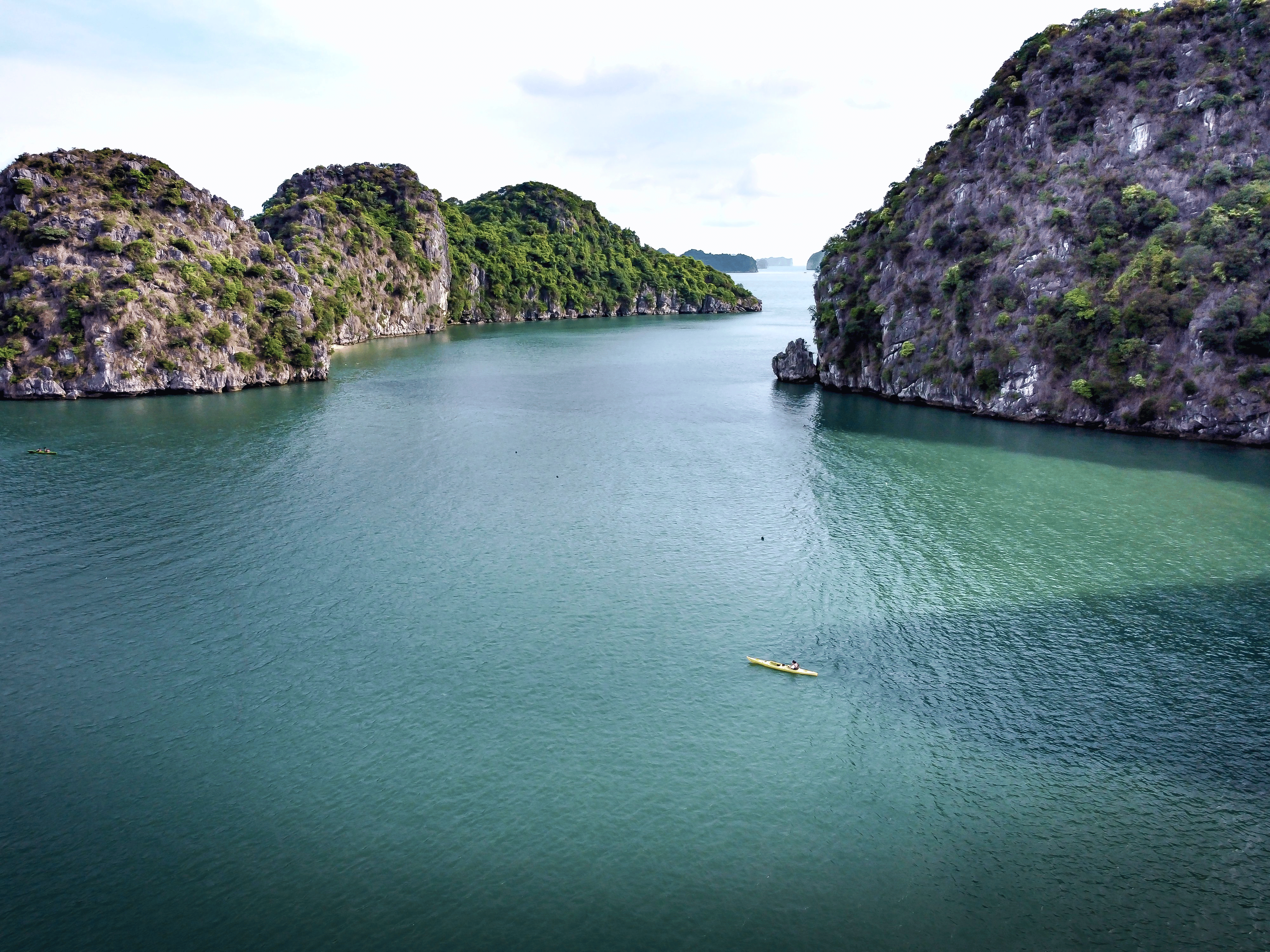
The legend behind these waters - dragons sent to fight off invading ships, spitting jewels that became the bay's nearly two thousand islands - is told in full in Travigma Atlas: Myth & History. What belongs here is simpler: this is still one of the only landscapes on earth that looks like the myth built to explain it, whether or not a visitor knows the story going in. Lan Ha Bay, adjoining Ha Long's more crowded waters, carries the same limestone and far fewer boats, which is less a hidden alternative than an open one most itineraries simply don't bother routing toward.
The Marble Mountains' Caves and Pagodas
Travigma Atlas: Craft & Markets tells the story of Non-Nước, the stone-carving village at the foot of these peaks. The mountains themselves hold a separate story above the workshops: a set of natural caves converted centuries ago into Buddhist shrines, sunlight cutting through collapsed cave ceilings onto stone Buddhas that have sat in the same chambers since well before the carving trade below existed. Huyền Không Cave, the largest and most visited, still functions as an active place of worship, incense smoke catching the light shafts the same way it likely has for centuries.
Cao Đài Great Temple
An hour and a half from Ho Chi Minh City, in Tây Ninh, stands one of the more unusual religious buildings in Southeast Asia: a cathedral built for a faith that considers Buddha, Confucius, Jesus Christ, and Victor Hugo equally valid spiritual guides. Cao Đài, founded in Vietnam in the 1920s, merges Buddhist, Taoist, Confucian, and Catholic elements into a single syncretic religion, and its Great Temple reflects that directly - a wildly colorful interior, a giant all-seeing eye above the altar, and daily services still conducted exactly as they've run for a century. Most visitors reach it as a rushed add-on to the Cu Chi Tunnels day trip from Saigon. It rarely gets treated as the destination it actually is.
Con Đảo
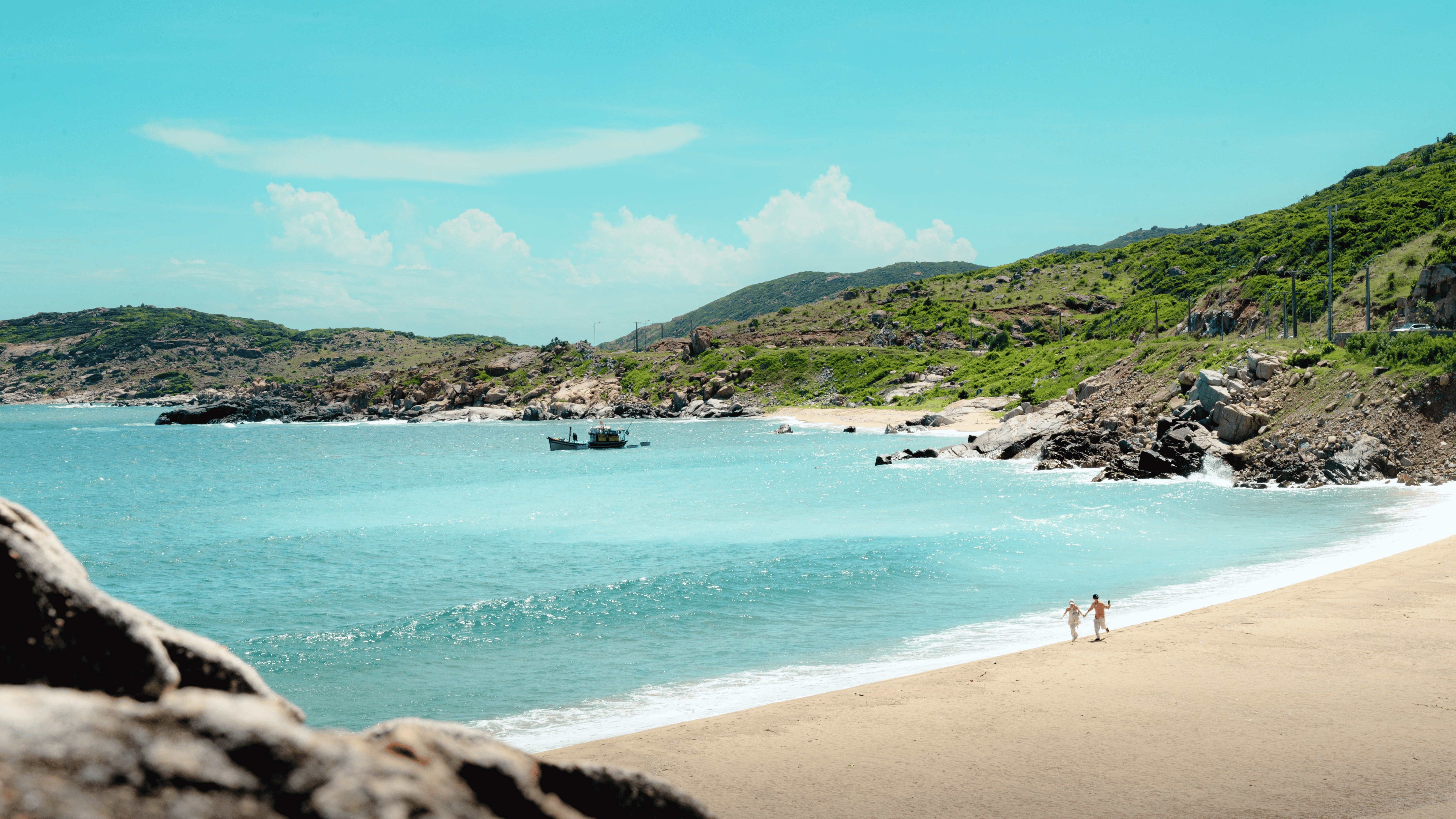
For much of the twentieth century, Con Đảo was a prison island, first under French colonial rule and later during the war, and its former cells are still standing, preserved rather than demolished. What the island has become since is close to the opposite of that history: one of Vietnam's quietest, most exclusive coastlines, largely undeveloped because tourism arrived late and slowly, waters clear enough that dugongs - sea mammals rare almost everywhere else in Vietnam's coastal waters, still surface here. Few places hold two such different chapters this openly, a former prison and a near-empty paradise occupying the same small island without either one canceling out the other.
Where the Detour Actually Leads
Ninh Bình and Lan Ha Bay already sit inside the North + Central Deep Dive Signature itinerary - a private junk at dawn on Lan Ha, no other boats in sight, paired with the Trang An sampan route on the same trip. The Bespoke tier goes further still: a fully private junk on Lan Ha Bay, personal crew included, inside the Full Country Private itinerary. Con Đảo's clear water and its dugongs sit inside the Living Heritage & Marine Bespoke itinerary, alongside the lacquerware and Balamon Cham craft access covered in Travigma Atlas: Craft & Markets. Yên Tử, the Marble Mountains' cave-pagodas, and Cao Đài's temple remain a real worth the trip.