What Vietnam Was Called Before It Was Vietnam
Ask when Vietnam became Vietnam, and the honest answer is 1804. Before that, across roughly four thousand years of recorded memory, the land wore five other names, in five different political shapes, under rulers who had no idea a country called Vietnam would eventually sit on the same coastline. Almost none of this reaches a visitor. Between the airport and the third bowl of pho, nobody hands over the sequence - Văn Lang, Âu Lạc, Nam Việt, Đại Việt, Annam and that explains how the place got its name at all.
The Kingdom That Started With an Egg
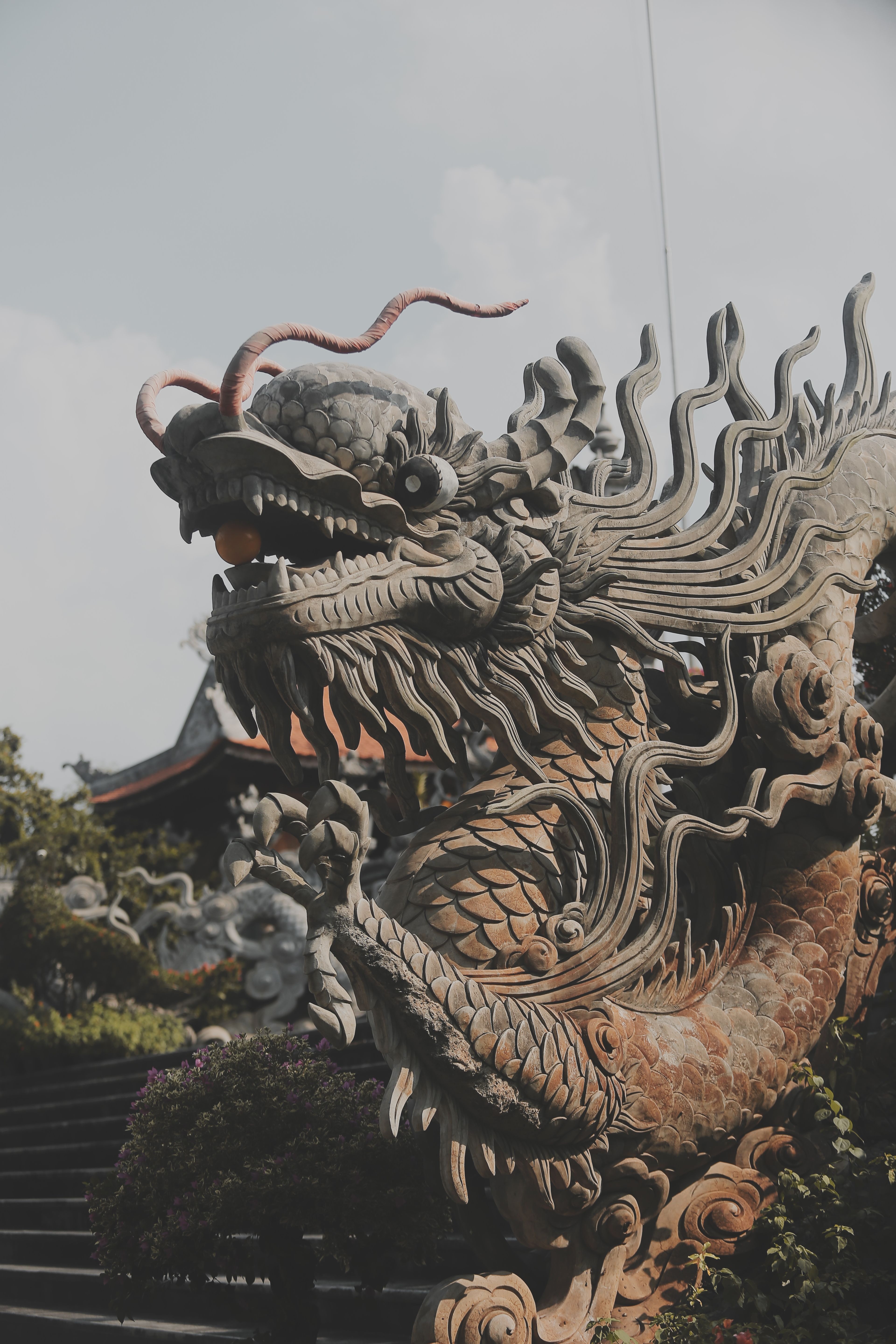
The first name belongs to a legend, not a government. Vietnamese school children still learn it before most other history: Lạc Long Quân, a Dragon Lord descended from the sea, married Âu Cơ, an immortal from the mountain line of the Divine Farmer. What they had together wasn't children in any ordinary sense. Âu Cơ laid a single pouch holding a hundred eggs, and from it came a hundred sons. The marriage didn't survive the arrangement. A dragon belongs to the water, a mountain immortal belongs to the peaks, and the two eventually agreed the difference was permanent. They split the sons in half. Fifty followed their mother into the highlands. Fifty followed their father to the sea. The eldest of the fifty who stayed near the coast became Hùng Vương, first of the Hùng Kings, and founded Văn Lang, by tradition, the first Vietnamese kingdom, said to have lasted almost two thousand years. The date is still marked as a public holiday every spring, on the tenth day of the third lunar month: Hùng Kings' Commemoration Day, the closest thing the country has to a shared origin story with an address.
Văn Lang didn't last as a name. Âu Lạc replaced it in the third century BCE. Nam Việt followed under the Triệu dynasty. Đại Việt came next, in 1054, and held for the better part of eight centuries through some of the country's strongest dynasties. Chinese and later French administrations called it Annam. It wasn't until 1804, under Emperor Gia Long, that the name Việt Nam, Việt, the old regional and ethnic name 'Nam' - simply south, was first used in its current form. Two words, doing exactly what the Lạc Long Quân legend had already said in myth eighteen centuries earlier: a people defined by the pull between sea and mountain, still being renamed by whoever held the coast that year.
The Dragon Comes Back
Lạc Long Quân's line doesn't end with the split. By local telling, the dragon shows up again generations later, and this time in a place you can actually stand in. When enemy ships came at Vietnam from the sea, the Jade Emperor sent a mother dragon and her children down from the mountains to fight them off. They didn't breathe fire. They spat jewels and jade into the water, and where the jewels landed, they turned to stone - nearly two thousand limestone islands, rising overnight into a wall no fleet could get through. The battle won, the dragons found they liked the place too much to leave. The mother settled where she'd landed, and the bay still carries her name: Hạ Long, literally "descending dragon." Her children came down further north, at what's now called Bái Tử Long. The islands are five hundred million years of limestone and erosion, if you ask a geologist. Vietnam kept the dragon story running alongside the geology, and most people cruising through the karsts today are photographing a fossilized battle without knowing it.
A Kingdom From the Other Direction
Everything above came from the north and moved south, shaped by dynasties, wars, and a founding legend that still gets retold every spring. A different kingdom arrived by an entirely different route - across the Bay of Bengal - and it left behind standing buildings, brick towers still upright a thousand years later.
Between the second and thirteenth centuries, the Champa Kingdom ruled the central and southern coast, and its gods were Indian. Traders and priests carried Shaivite Hinduism across the water long before Vietnam or India had their current borders, and Champa built accordingly. Red-brick towers to Shiva, Vishnu, and Krishna, with Sanskrit inscriptions still legible on some of the stone. The largest concentration stands at Mỹ Sơn, a valley near Da Nang that UNESCO now lists as a World Heritage Site, and that Vietnam's own tourism board describes, not incorrectly, as the country's answer to Angkor. The brick construction technique that no visible mortar joints, still not fully explained by modern engineering which has survived war, weather, and, in the twentieth century, American bombing that damaged several of the towers directly.
Mỹ Sơn matters for a specific reason most descriptions skip: it's the largest surviving evidence that a Hindu kingdom ran the Vietnamese coastline for roughly a thousand years. What that kingdom started didn't end when the towers stopped being built.
What Didn't Stop
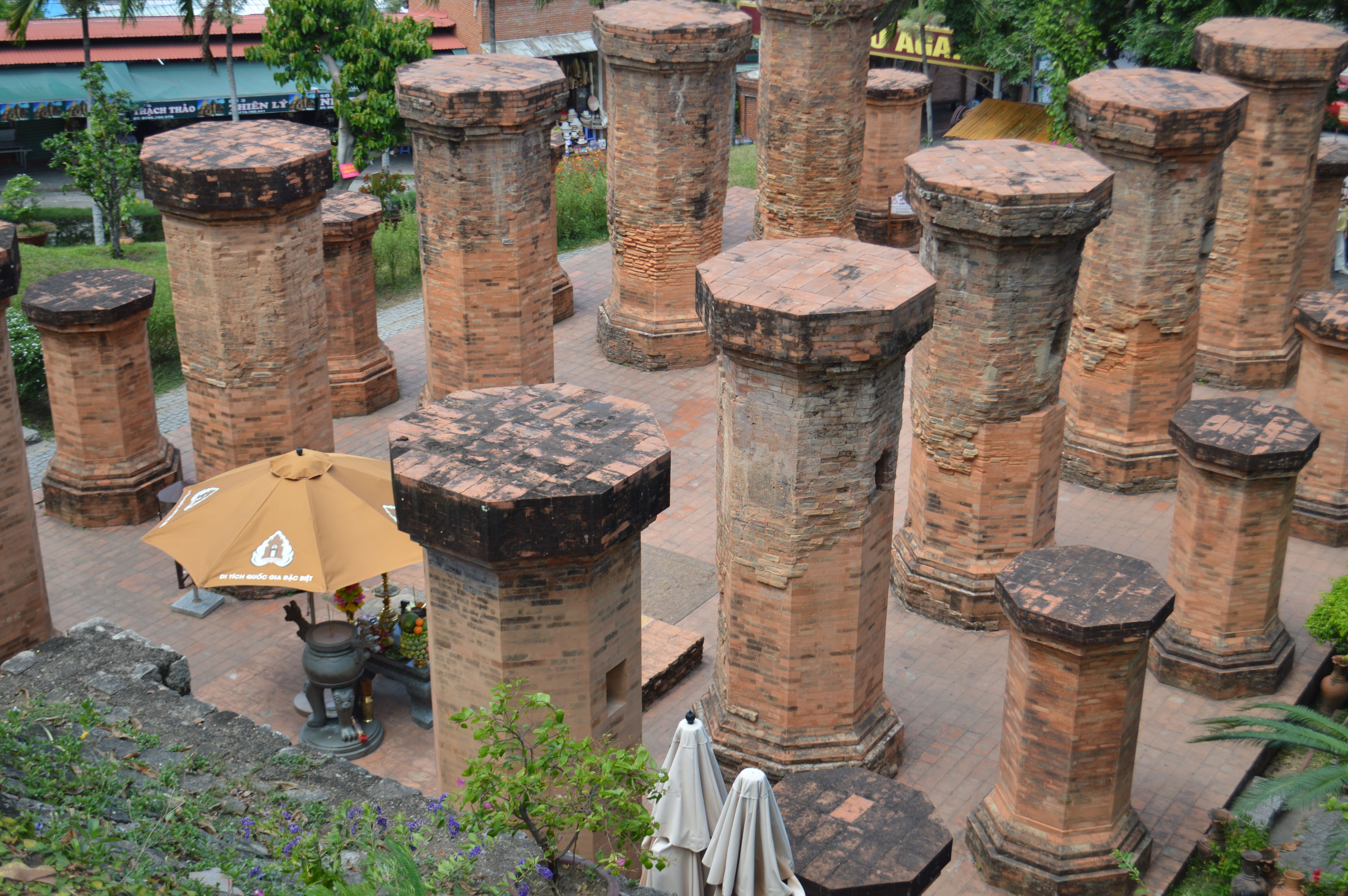
Two hundred kilometers south, in Nha Trang, a set of Cham towers called Po Nagar still holds active worship. Cham, Vietnamese, and Chinese worshippers climb the steps to light incense in front of a goddess carved a thousand years ago - Yan Po Nagar to the Cham, Thiên Y A Na to the Vietnamese who later folded her into their own devotional practice, and her iconography is unmistakably close to a Hindu goddess an Indian visitor would recognize on sight.
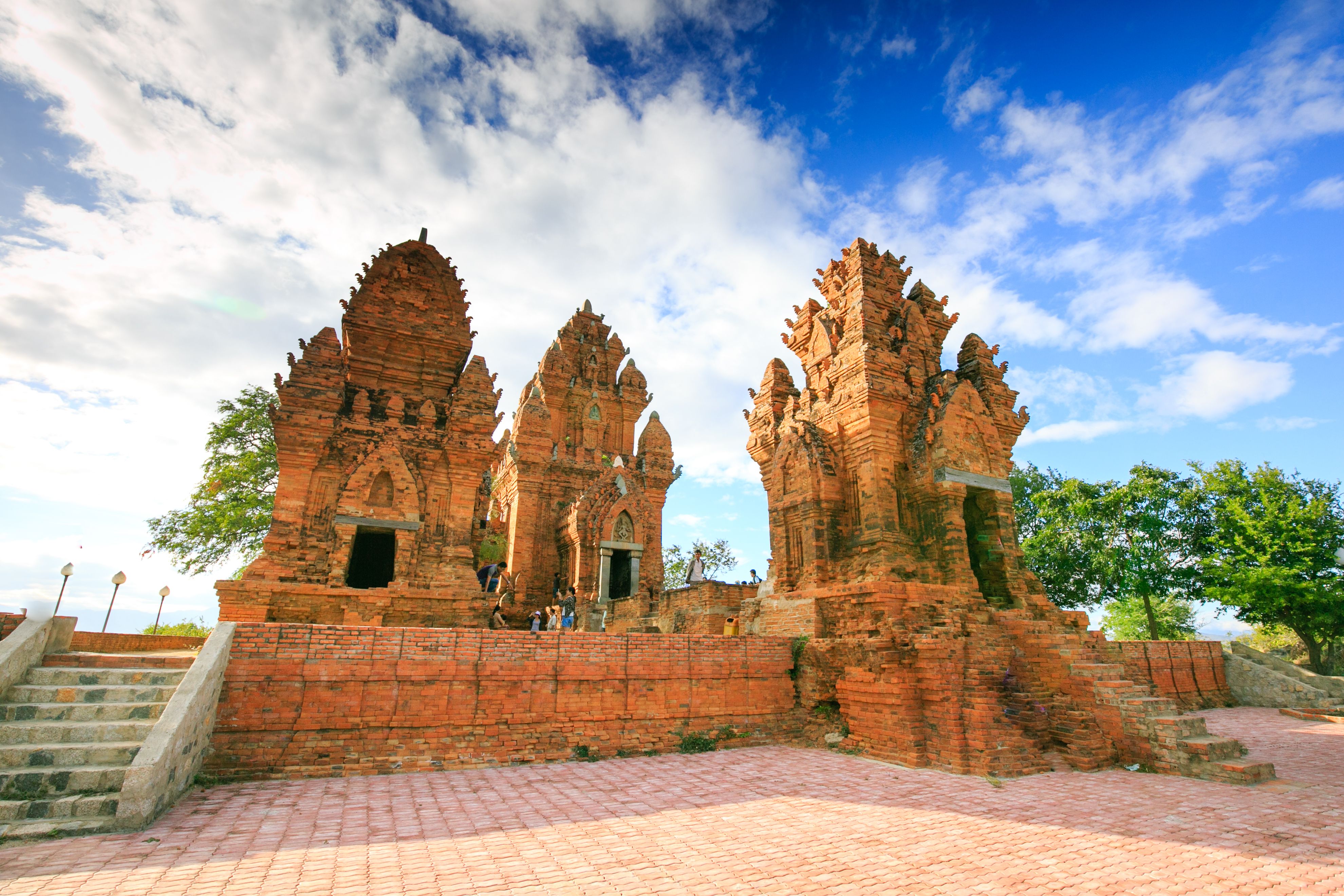
Further south again, around Phan Rang and Phan Thiết, a Cham Hindu community called the Balamon Cham still practices Shaivite Hinduism today, daily devotional life continuous since the kingdom that built Mỹ Sơn. Their towers at Po Klong Garai still stand near Phan Rang. Their weaving villages still run on techniques passed down inside families rather than written anywhere down. It is, by any honest measure, one of the least-known living Hindu communities outside India — and almost nobody selling Vietnam to Indian travelers mentions it exists.
Where This Goes, If You Want It To
Travigma's Signature Champa Heritage Trail is built around exactly this thread - a private historian at Mỹ Sơn, a visit to Po Nagar timed to the temple's living worship rather than a tour bus schedule, and a stop in Ninh Thuận that most itineraries don't know to include: an afternoon inside a Balamon Cham family's own weaving workshop, arranged directly through Travigma's ground relationships, not offered anywhere else in Vietnam's current travel market. A thousand-year thread, opened for one afternoon, to whoever goes looking for it.
Interested in seeing this place
your way?
Tell us what drew you here and we will shape the route, pace, and details around you.