Travigma Atlas · Vietnam — Festivals & Living Culture
Most travel calendars treat festivals as decoration, a nice coincidence if your dates happen to line up. In Vietnam, the calendar deserves to be the starting point, not an afterthought. Some of these festivals shut the country down. Some happen every single month. One belongs to a community most visitors don't know is still here. Timed right, any of them changes what a trip actually is.
| Festival | Approximate Month(s) |
|---|---|
| Tết Nguyên Đán | Late January – mid February |
| Giỗ Tổ Hùng Vương | March – April |
| Huế Festival (even years only) | April |
| Vu Lan | August |
| Cham Kate Festival | September – October |
| Tết Trung Thu | September – October |
| Hoi An Lantern Nights | Every month, 14th lunar night |
Lunar-calendar festivals shift against the Gregorian calendar year to year, these are indicative months, not fixed dates. Kate Festival and Trung Thu often land in the same window, worth planning around if both interest you.
Tết Nguyên Đán
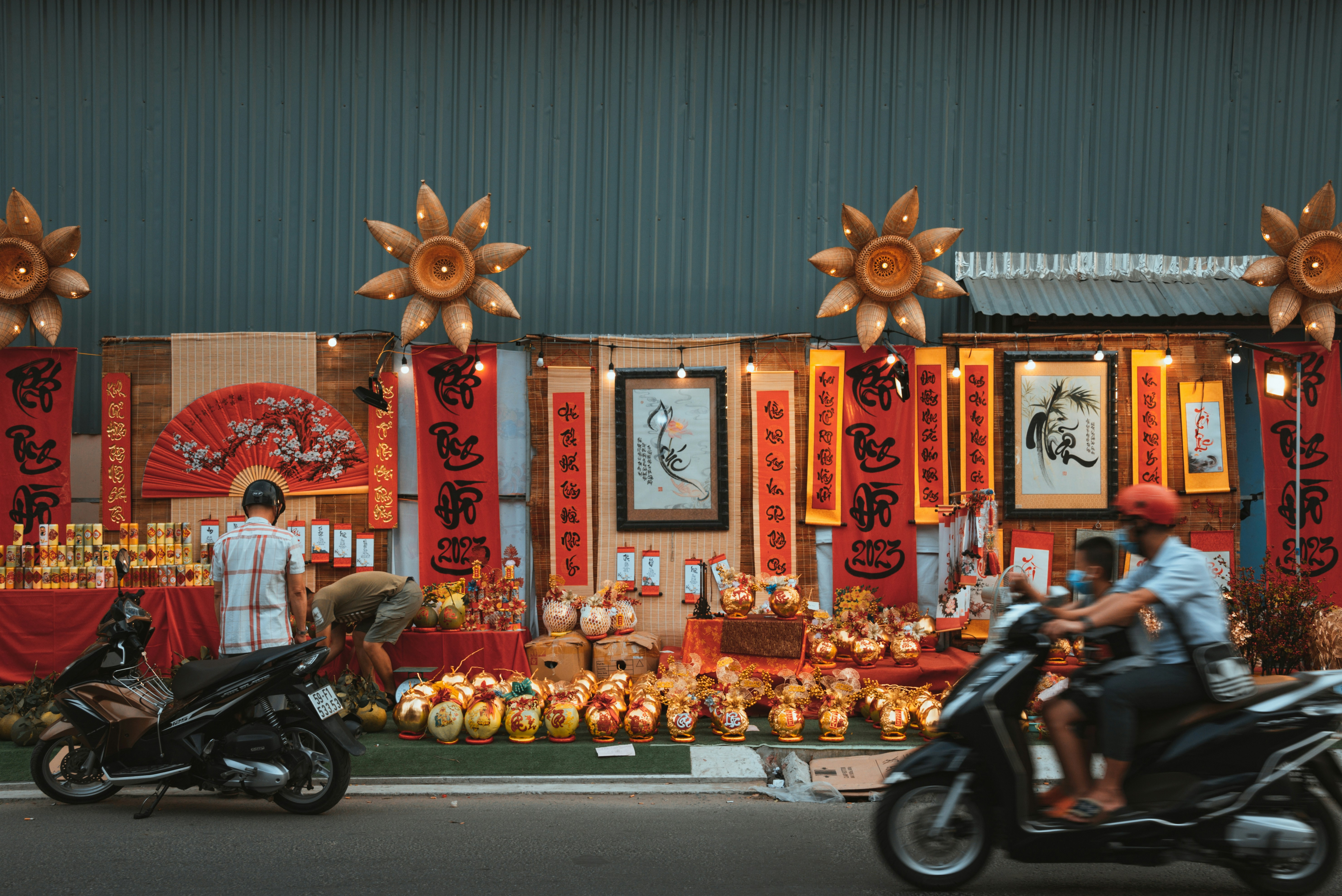
During Tết, Vietnam doesn't celebrate a new year. It goes home.
Lunar New Year is the one worth naming first, and the one worth being honest about. For the better part of a week, Vietnam closes: businesses shut, families travel home from wherever they've scattered to, and the entire country turns inward toward ancestor worship and reunion meals. It is the single most important date on the Vietnamese calendar, and it is also, deliberately, not a window for visitors to book their way into someone's family table. The honest way to plan around Tết is to know when it falls and build a trip either just before or just after it - not during, when most of the country a traveler would want to see is closed for reasons that have nothing to do with tourism.
Giỗ Tổ Hùng Vương
Every spring, on the tenth day of the third lunar month, Vietnam marks the death anniversary of the Hùng Kings - the legendary founders of Văn Lang, the country's first kingdom, born from the marriage of a dragon and a mountain immortal. The full legend lives in Travigma Atlas: Myth & History. What matters here is that the story isn't kept in a book. It's kept as a public holiday, observed every year at temples across the country and most visibly at the Hùng Temple complex in Phú Thọ province, where the kings are said to be buried.
Vietnam’s ancestral festival honouring the Hùng Kings.
Tết Trung Thu
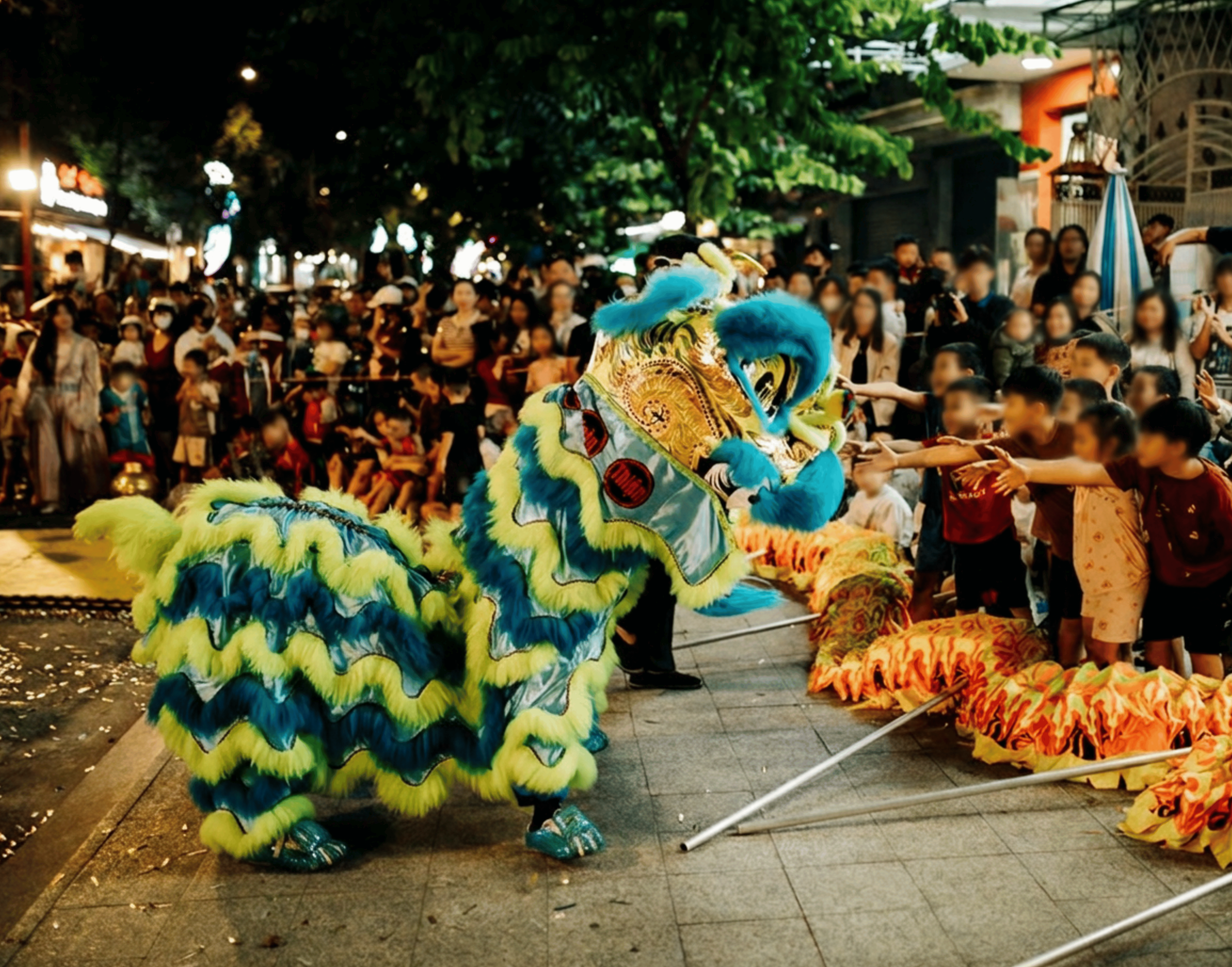
The Mid-Autumn Festival belongs to children more than any other date on the Vietnamese calendar. Streets fill with paper lanterns, lion dance troupes move block to block, and mooncakes - dense, sweet, filled with lotus paste or salted egg yolk -; get exchanged the way other cultures exchange holiday sweets. It falls on the fifteenth day of the eighth lunar month, close enough to the harvest that the festival's original purpose -; giving thanks for a good season -; still shows up underneath the modern version built around children and lanterns.
Vu Lan
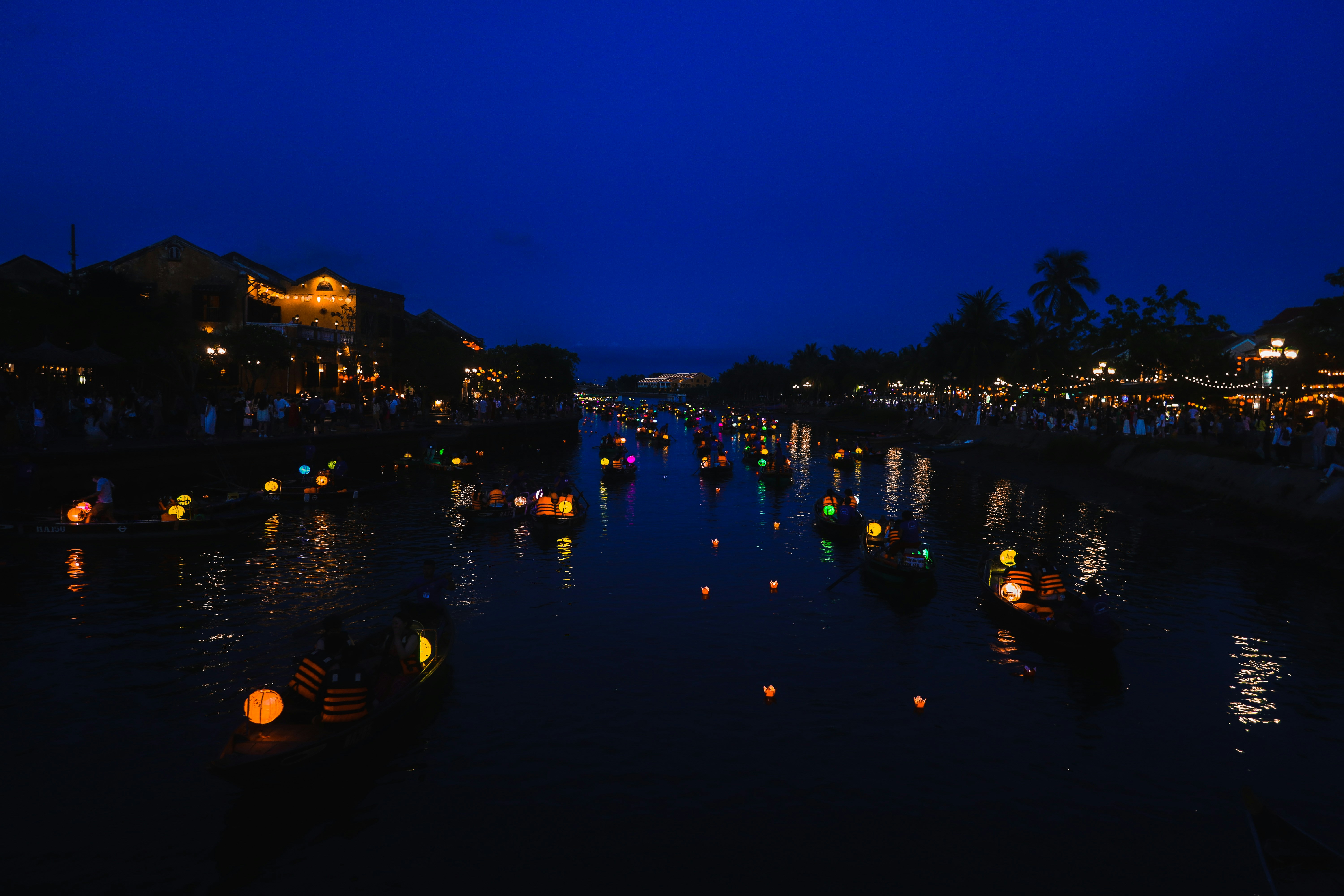
Vu Lan, Wandering Souls Day, is a Buddhist festival of filial piety, observed on the fifteenth day of the seventh lunar month. Families visit temples to honor parents living and dead, and in some regions the evening ends with paper lanterns set onto rivers, carrying wishes downstream. It's a quieter festival than Tết or Trung Thu, built around gratitude rather than celebration, and it rarely appears on a first-time visitor's radar at all.
Vietnam’s festival of filial remembrance.
Hoi An's Lantern Nights
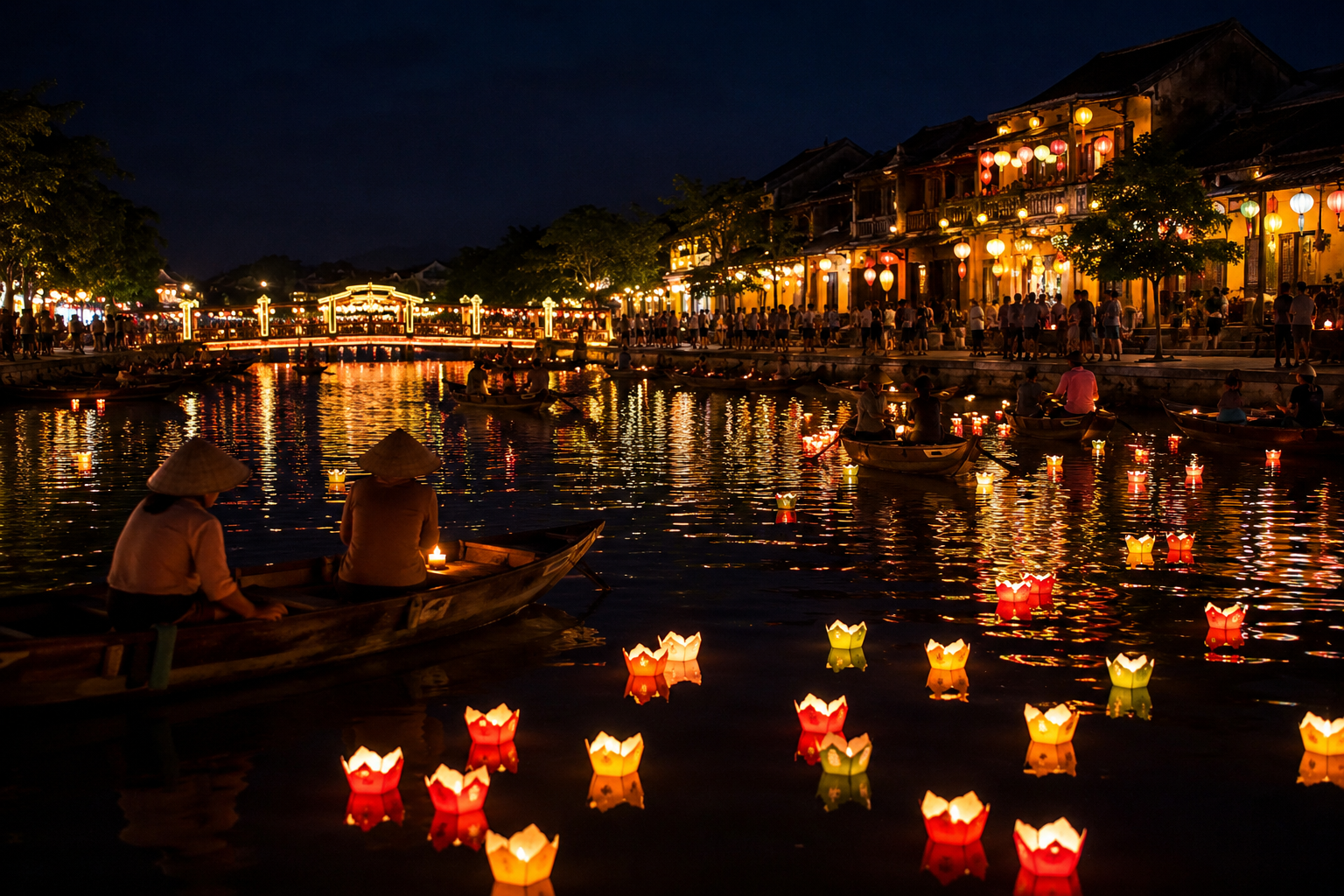
Here is the one exception to almost everything above: Hoi An's lantern festival isn't an annual event at all. On the fourteenth night of every lunar month, the town switches off its electric lights, the river fills with candlelit paper lanterns, and the old town runs on lantern light alone until morning. Because it happens monthly rather than once a year, it's the single easiest festival on this list to actually build a trip around. There's no once-a-year date to miss, only a question of which month you're already planning to be in Vietnam.
Cham Kate Festival
The Balamon Cham community around Ninh Thuận and Bình Thuận - the same Hindu community whose towers, temples, and weaving traditions are told in full in Travigma Atlas: Myth & History - marks its own New Year with Kate, typically falling in the seventh month of the Cham calendar, around September or October. Families return to ancestral villages, towers at Po Klong Garai and elsewhere fill with offerings, and the community's own textiles and rituals are on full, unfiltered display in a way they aren't for the rest of the year. It's the one festival on this list that isn't observed nationally, and the one where a well-timed visit means access to something most of Vietnam's own visitors never see.
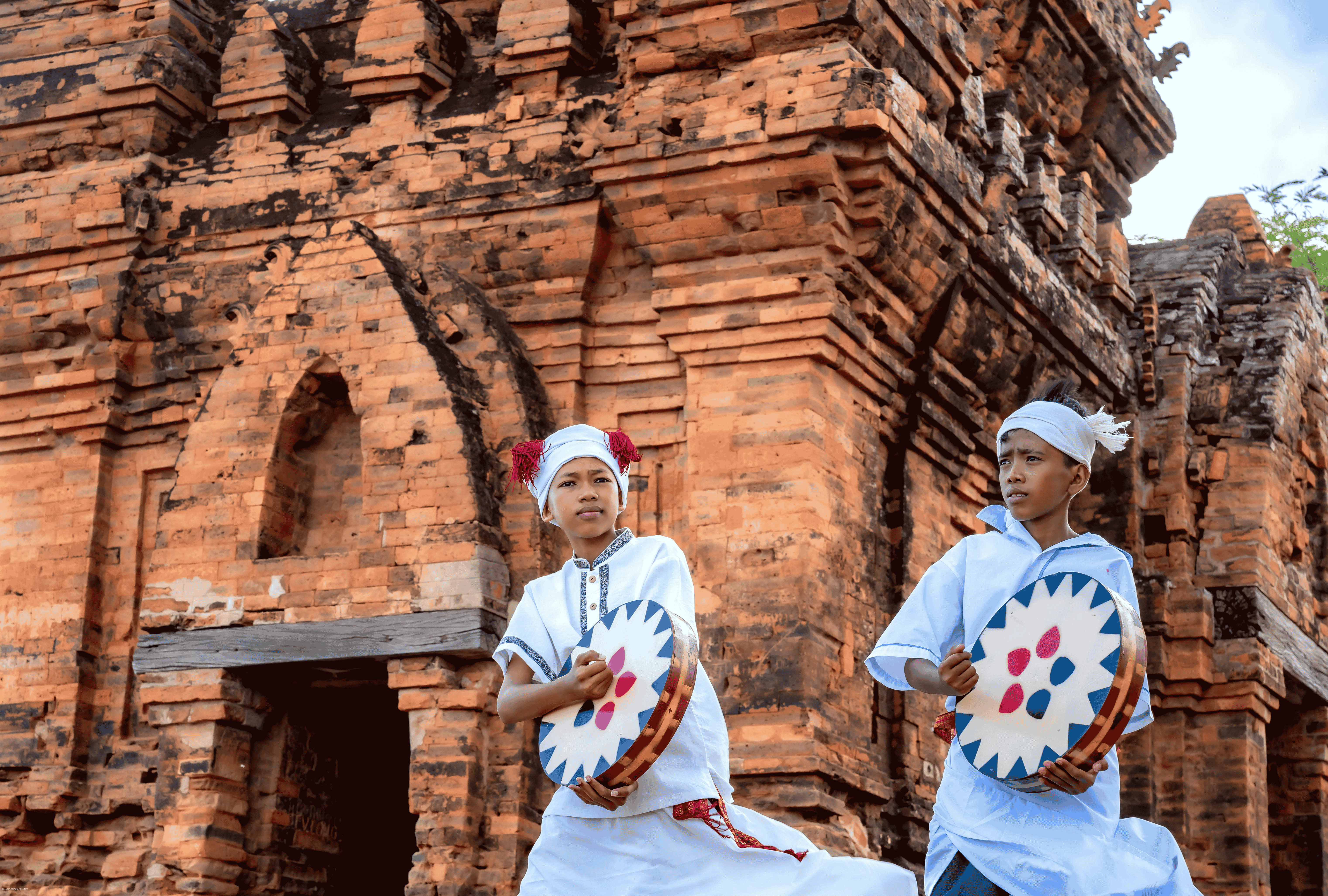
Kate Festival — the Cham community’s living celebration of ancestors, deities and heritage.
Huế Festival
Every two years, Huế puts its imperial history back on stage. The Huế Festival turns the old citadel and its surrounding palaces into a live setting for court music, royal processions, and traditional theater - the same imperial culture behind the city's food, told in full in Travigma Atlas: Food Trail , performed rather than eaten. Because it only runs in even-numbered years, it rewards planning further ahead than almost anything else on this calendar.
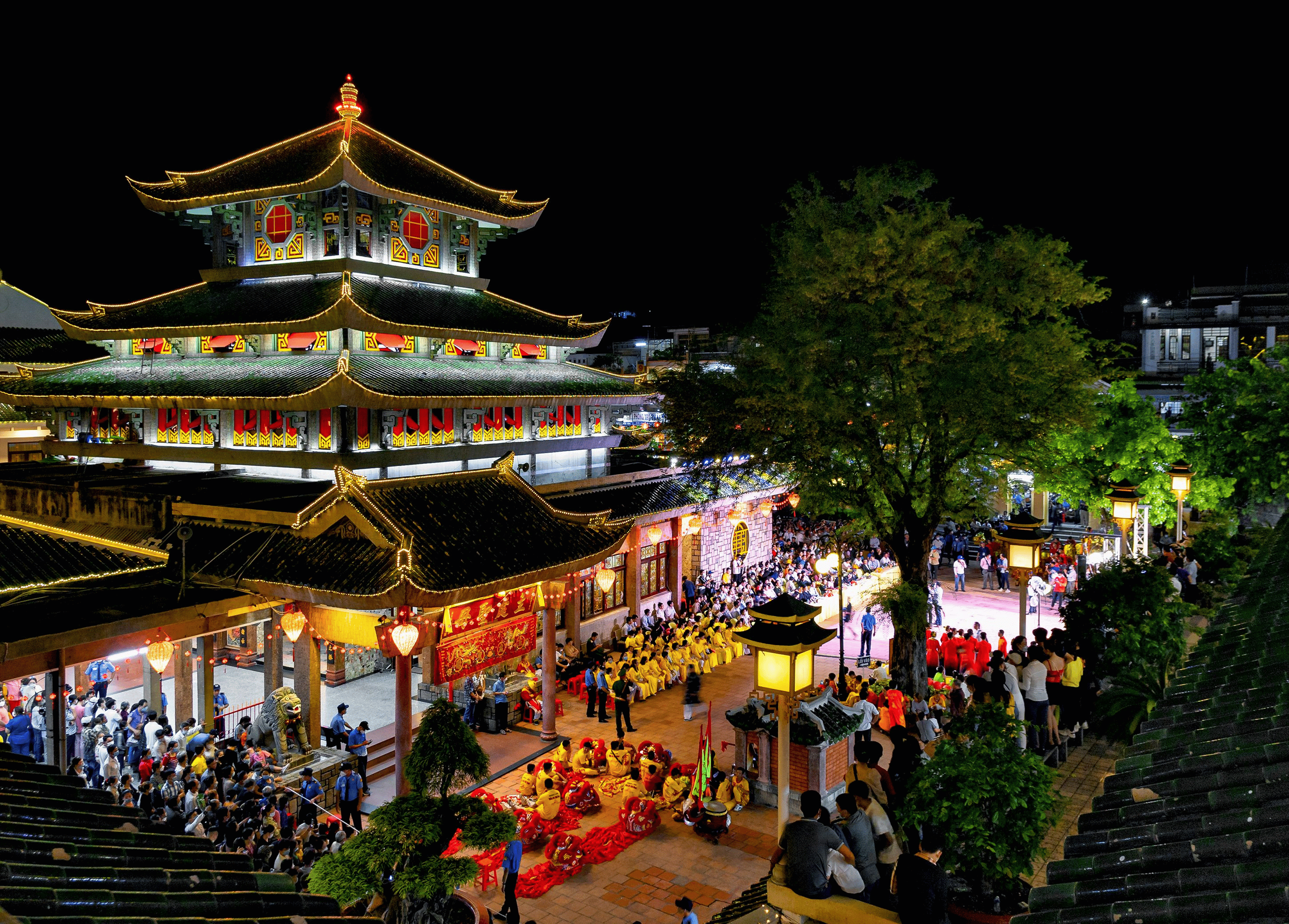
Huế Festival — the imperial city’s living celebration of art, music and heritage.
Where the Calendar Meets the Map
Two of these festivals already sit inside routes Travigma runs. Hoi An's monthly lantern night needs no special timing at all - any Vietnam itinerary that includes a Hoi An evening can be built around the fourteenth lunar night with a simple date check. Kate Festival is rarer: timed correctly, it turns the Champa Heritage Trail's private Ninh Thuận weaving visit from a quiet afternoon into a look at the Balamon Cham community during the one week of the year they're celebrating their own new year in full. The rest of this calendar - Tết, Trung Thu, Vu Lan, the Huế Festival - is worth planning around.