Vietnam runs more than 1,600 km from north to south, and the weather does not agree with itself along the way. In Hanoi in January you want a jacket. In Ho Chi Minh City (Saigon) the same week, you want a second shirt by noon.
That is the trouble with most packing lists. They describe one climate for a country that has three. This one is built from what recent travellers said they were glad to have, and what they wished they had left at home, then sorted by where you are actually going.
We believe in sharing what we learn, because it is a matter of travel, and sharing is caring.
What to pack for Vietnam: the short answer
Pack light, quick-dry layers that cover your shoulders and knees, and carry your own medicines and skincare. Almost everything else is available within minutes of your hotel. Nine things matter most:
- Quick-dry long sleeves and long pants or skirts. They shield you from the sun and are expected at temples.
- More socks and underwear than feels sensible. It's humid, you will sweat the moment you step outside, and welcome to the tropics.
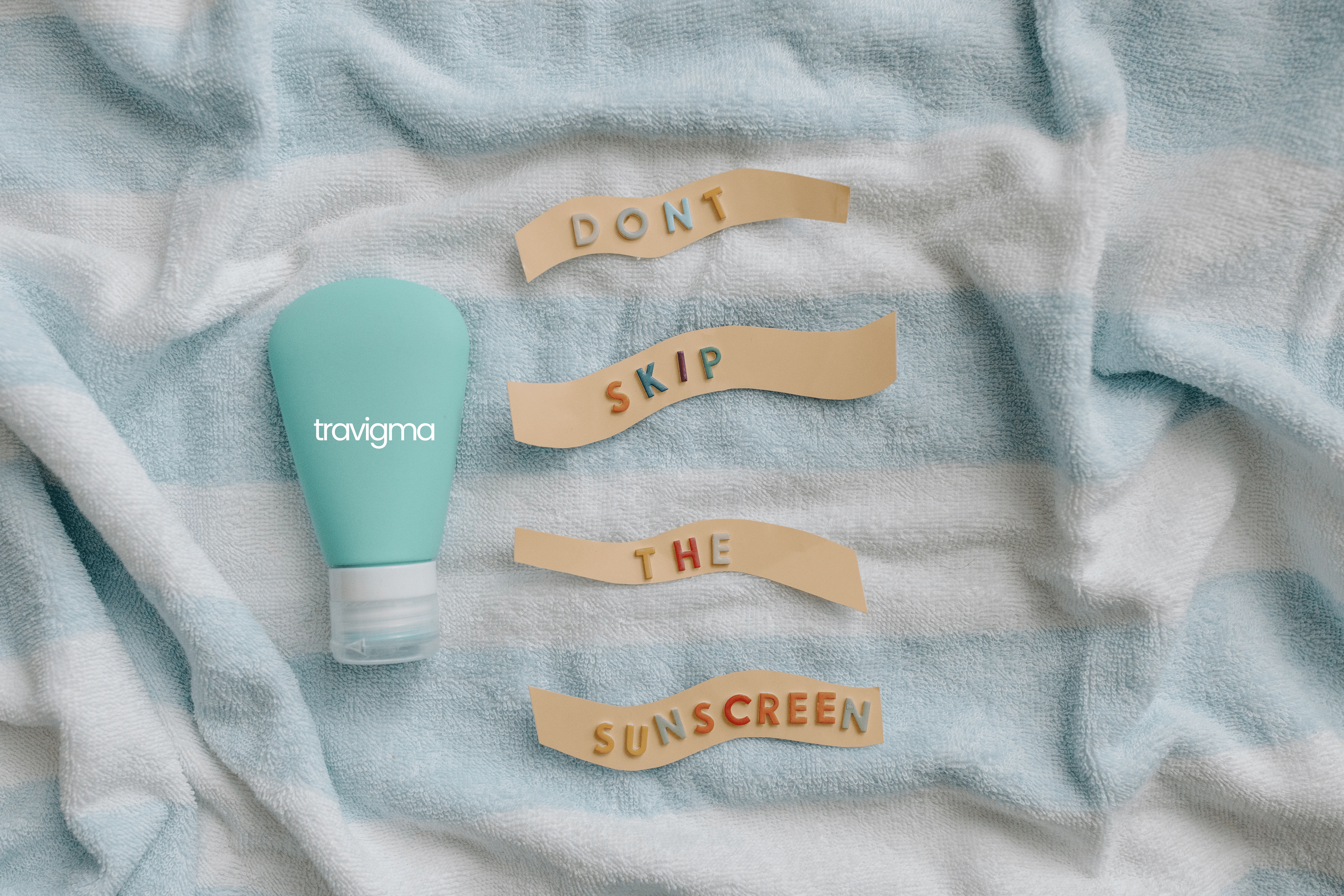
- Sunscreen, a hat or cap, and sunglasses. Do not leave without them.
- A thin poncho or a sturdy umbrella.
- Sandals or crocs for flooded streets, plus one pair of closed shoes.
- A travel medicine kit.
- Electrolyte sachets and a reusable water bottle.
- An eSIM or data plan, set up before you land.
- A power bank under 100 Wh and a universal plug adapter.
What you add on top depends on the region and the month.
| Region | Season to know | What to add |
|---|---|---|
| North: Hanoi, Sapa, Ha Long Bay | Crisp and dry in Oct–Nov; cool and grey Dec–Feb; hot and wet Jun–Aug | A fleece or light jacket from Oct to Mar; closed shoes with grip |
| Centre: Hue, Da Nang, Hoi An | Wet Sep–Dec, peaking Oct–Nov; dry and sunny roughly Feb–Aug | An umbrella, waterproof sandals, a dry bag |
| South: Ho Chi Minh City (Saigon), Mekong Delta, Phu Quoc | Dry Dec–Apr; rain May–Nov; hot all year | The lightest fabrics, a handheld fan, swimwear |
What to pack for North Vietnam: Hanoi, Ha Long Bay, Sapa and Ninh Binh
The north is the one region that asks for a warm layer. October and November are crisp and dry, and widely rated the best season. From December to February it turns cool and grey, with Hanoi around 14 to 22°C and much colder nights in the mountains. June to August is hot, humid and wet.
Bring a fleece or light down jacket for Sapa and the highlands, and a light sweater for Hanoi. Ha Long Bay turns chilly on the water, especially at sunrise, so an extra layer earns its place there. People dress more conservatively here than in the south, which makes long pants and sleeves the easier choice. Closed shoes with grip suit Sapa treks and the muddy trails near Ninh Binh. Add a poncho, because in the wetter months heavy showers can keep Ha Long Bay boats in port. Swimwear can stay home unless your hotel has a pool.
What to pack for Central Vietnam: Hue, Da Nang and Hoi An
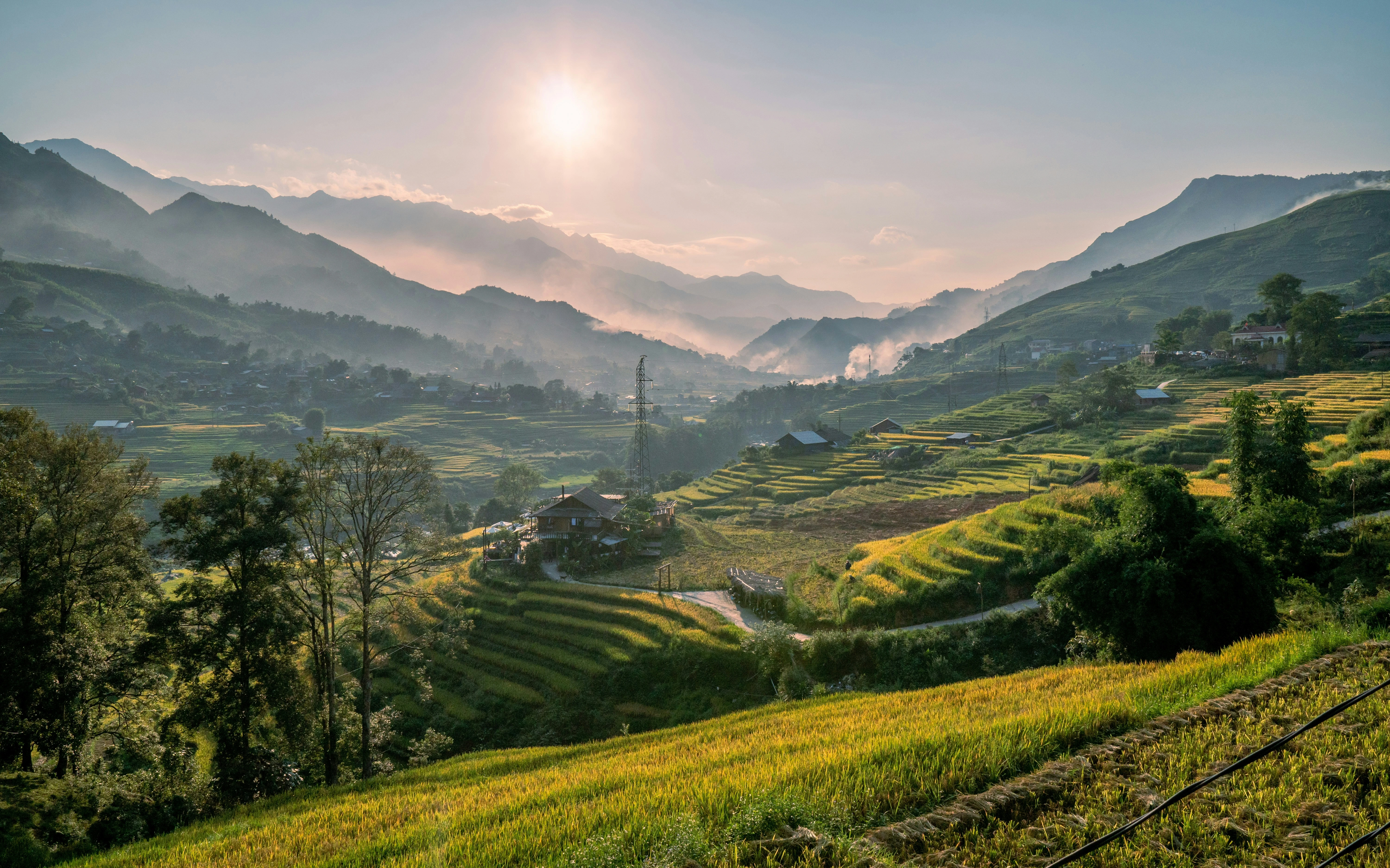
The centre keeps its own calendar. The wet season lasts from about September to December and peaks in October and November, when typhoons and flooding are most likely and Hoi An's old town regularly floods. Rain eases by the end of December, and the dry, sunny stretch runs roughly from February to August. Even in January it is mild rather than hot, around 20 to 25°C, with frequent drizzle. Check the forecast before you plan beach days.
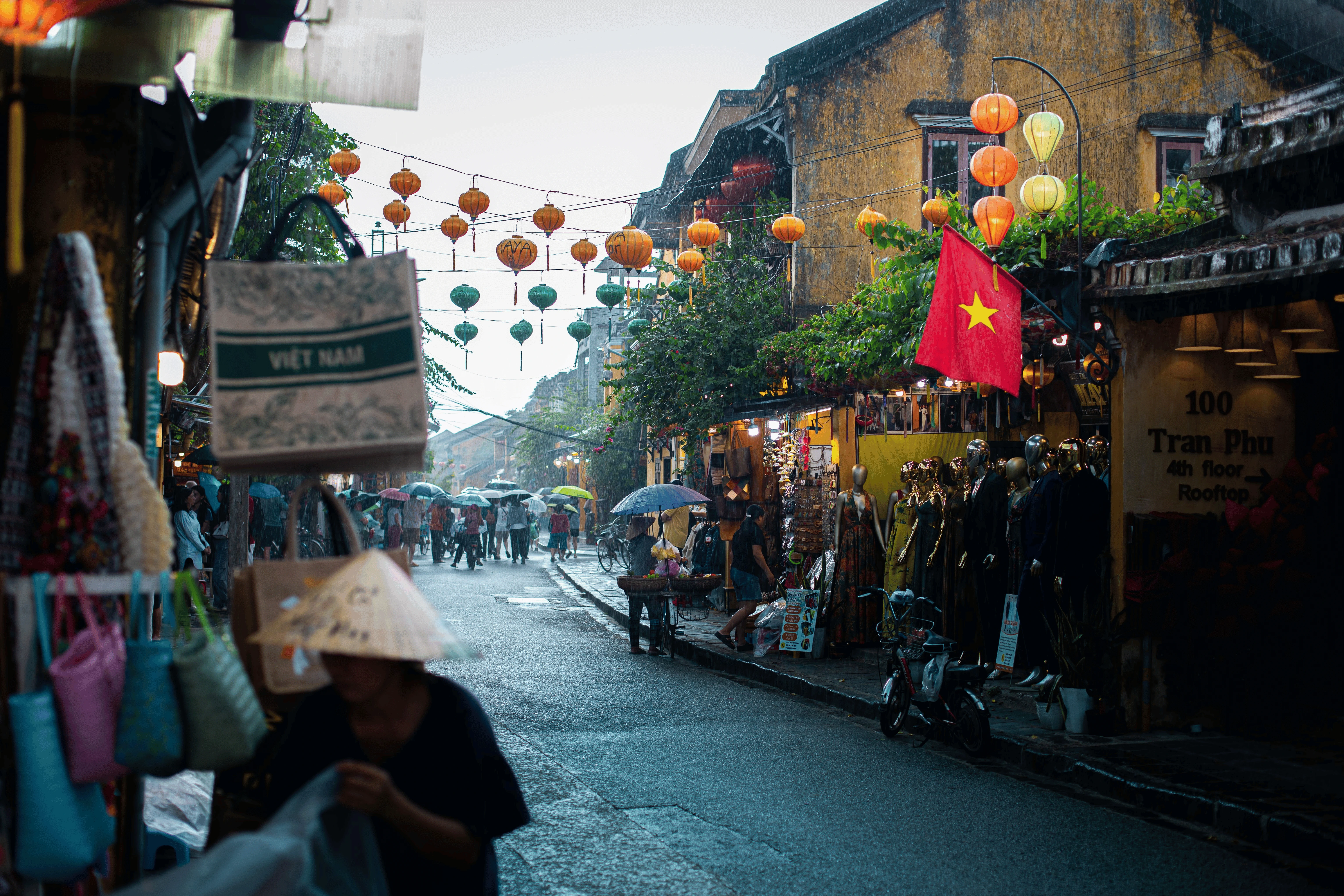
In the wet months, take a sturdy umbrella, because small ones do not cope with the downpours, and a poncho for scooter rides and walking tours. Waterproof sandals or crocs handle ankle-deep puddles, quick-dry socks help if you wear sneakers, and a dry bag keeps your phone and passport safe. White or delicate clothing and canvas shoes will not dry, so leave them behind.
Temples and monuments set the dress code here. Hue's Imperial City and royal tombs ask for long pants and covered shoulders, and checks are strict at Linh Ung Pagoda and the Lady Buddha in Da Nang. A sarong or light scarf is accepted as a cover-up. If you travel between February and August, add a swimsuit.
What to pack for South Vietnam: Ho Chi Minh City (Saigon), the Mekong Delta and Phu Quoc
The south is hot and humid all year, with highs of roughly 29 to 32°C in the cooler months and little relief at night. Rain falls from about May to November, in showers that are short and heavy rather than all-day. The dry season runs from December to April, and December brings the best beach weather on Phu Quoc along with the highest prices.
Pack the lightest fabrics you own: linen, thin cotton, quick-dry shirts. Plan on changing twice a day, which means extra underwear and socks, a hand towel for sweat, and a handheld fan for indoor spots where the air conditioning is weak. A poncho covers the rainy months, a swimsuit covers Phu Quoc and the coast, and a very light layer is enough for air-conditioned buses and restaurants.
Dress is more relaxed than in Hanoi, and shorts and t-shirts are normal in the city. Religious sites are the exception. Bring a cover-up for temples and for the Cao Dai Holy See in Tay Ninh, where guards turn away visitors in shorts.
What you can't easily buy in Vietnam
You can find almost anything within minutes of your hotel. A short list is the exception.
Start with a travel medicine kit. Keep your prescribed medicines with you, and bring generic medicines for common problems: paracetamol, anti-diarrhoea tablets, an indigestion liquid, hydration salts and band-aids. Rich food and heat can upset sensitive stomachs. If you get seasick, add motion sickness tablets for boat days at Ha Long Bay and Phu Quoc.
We recommend bringing your own skincare routine, sunscreen included. Local sunscreen choices are limited. The same goes for your usual toiletries, since hotel amenities may not suit everyone.
What to leave at home
Heavy jeans and thick clothes trap heat and take days to dry. Hotels supply towels. Smart shoes and heels rarely leave the suitcase, since most places are casual or smart casual, even for a good dinner. Snacks are unnecessary for most travellers, because eateries and grocery stores are everywhere. Hiking boots are only worth the space if you are heading for muddy trails such as those around Ninh Binh.
The larger saving is clothing. Laundry is inexpensive and usually back within a day, so pack for about a week and wash as you go. It also helps on short domestic flights, where budget carriers such as VietJet cap cabin bags at 7 kg and Vietnam Airlines allows around 10 kg in economy. Check your own airline's baggage page before you fly.
Heat and humidity: what actually helps
Humidity is what first-time visitors underpack for, so keeping yourself hydrated matters. Electrolyte tablets or powder that drop into a water bottle are the favourite fix. Stick to sealed bottled water or water you have purified yourself, and be careful with ice from unknown sources.
A few small items earn their space in your daypack: pocket tissues and paper soap, since many public restrooms lack toilet paper and handwash, hand sanitiser for street-food stops, and a couple of face masks for dusty scooter rides in city traffic. A tropical country without a mention of mosquitoes would be incomplete, so pack repellent, especially for the Mekong Delta, Ninh Binh and evening riverfronts. Some travellers bring their own and others buy local, so take what works for you, and check your airline's limits if you carry an aerosol. If you really want to beat the heat, a portable handheld fan helps where air conditioning is weak, such as in cafes.
What women should pack for Vietnam
Most of what women need is already above, but a few things deserve their own mention. Bring your own skincare and a sunscreen you trust, for the reasons given earlier.
On clothing, think light, loose and layered. Loose linen trousers, midi skirts and breathable cotton tops with sleeves, plus a light scarf or shawl that covers your shoulders at pagodas, let you move from humid street markets into temples without changing. Add a light layer for air-conditioned buses and the cooler north. Choose sandals you can walk in all day, because cobbled old towns and long market streets are hard on thin soles.
Carry a zippered crossbody bag worn in front rather than a tote or a shoulder bag. It is safer and more practical on busy pedestrian streets and when crossing scooter traffic.
What men should pack for Vietnam
Men tend to overpack heavy fabric and underpack shirts. Bring three or four quick-dry or breathable shirts, light shorts, and one pair of lightweight long trousers for temples, formal dinners and cooler evenings in the north. Cotton jeans are the thing to leave behind.
A cap or hat matters more than it seems on long days outdoors, and so does sunscreen, which men skip more often than they should. Pack a razor and your usual grooming kit, as hotel supplies are basic. One closed shoe and one pair of sandals is enough.
If you are travelling with parents or young children
Family trips fail in the small gaps, so a few extra things are worth packing. Slip-on walking shoes save older parents from bending to untie laces at temples and heritage homes that ask you to remove footwear. A sturdy umbrella doubles as shade on midday walks in Hue or Ninh Binh. Electrolyte sachets keep children and grandparents steady through a long day of sightseeing. If someone needs regular meals, such as a diabetic parent, carry a few dry snacks for long drives, since schedules slip.
Notes for Indian travellers
Indian passport holders can apply for a Vietnam e-visa online, valid for up to 90 days. The government fee is US$25 for a single entry and US$50 for multiple entries. Your passport needs at least six months' validity. Phu Quoc is the exception to the visa rule: Indian travellers can stay there up to 30 days without a visa, but only if they fly in directly from abroad, stay on the island and leave directly from it. If you want the mainland as well, apply for the e-visa. Travigma helps its customers with the visa process, if required.
For money, carry a zero-forex-markup card, some Vietnamese dong in cash, and a backup card. Some ATMs and shops add a surcharge of around 4%, so having cash and a second card saves a bad moment at the till.
Vietnam's supply is 220V and India's is 230V, so chargers marked 100–240V work without a converter. Carry a small universal plug adapter.
Vegetarian travellers will do well in most cities, where chay restaurants are common, but it helps to say it plainly. Useful phrases: "Tôi ăn chay" (I eat vegetarian), "Không thịt, không cá" (no meat, no fish) and "Không nước mắm" (no fish sauce), since fish sauce hides in many dishes. Jain travellers should ask about broths and shared cooking, and may want to carry a few dry staples for long travel days.
Direct flights from India land mainly in Hanoi and Ho Chi Minh City, and routes change often, so check current schedules, especially if you plan to arrive in Da Nang.
Still working out how to split your days between North, Centre and South? The pacing is where most first trips go wrong. Test your route and season fit on our Experience Builder, or send us your draft for a free 24-hour human review.
A few quick answers
Is Vietnam cold in December and January?
Only in the north. Hanoi is cool and grey at around 14 to 22°C, and Sapa is much colder, so pack a fleece. Hue, Da Nang and Hoi An sit around 20 to 25°C with drizzle, and Ho Chi Minh City stays hot and dry.
Do I need a travel adapter for Vietnam from India?
Carry a small universal plug adapter. Vietnam's supply is 220V and India's is 230V, so chargers marked 100–240V work without a converter.
What is the dress code for temples in Vietnam?
Cover your shoulders and knees at pagodas, temples and imperial sites such as Hue's Imperial City. A light scarf or sarong in your daypack works as a quick cover-up.
Can I buy what I forget in Vietnam?
Almost everything, within minutes of your hotel. Medicines you rely on, sunscreen, skincare and your preferred sanitary pads are the main things to bring from home.
Do Indian travellers need a visa for Vietnam?
Yes. Most Indian travellers apply for an e-visa online, valid for up to 90 days. The government fee is US$25 for a single entry or US$50 for multiple entries. Confirm current rules on the official e-visa portal before you book.