Travigma Atlas · Sri Lanka - Myth & History
The Island That Kept Getting Found
Sri Lanka sits close enough to India to be reached by an exiled prince, a missionary monk, a smuggled tooth, and eventually a colonial rail line, all within roughly two thousand years of recorded history. It was also close enough to the rest of the world to be worth fighting over for reasons that had nothing to do with any of that: a spice, a pearl, a harbor. Most visitors get one layer of this. The island's actual story is a set of arrivals, each one leaving something behind that the next one had to work around.
The Exile Who Became a King
The Mahavamsa, Sri Lanka's own ancient chronicle, opens the island's recorded history with a prince named Vijaya, exiled from Kalinga - roughly modern Odisha, along with seven hundred followers, for behavior too unruly even for his own father's court. He landed on Sri Lanka's shores and, in the chronicle's telling, married a local sorceress named Kuveni before setting her aside to marry a Pandyan princess brought over from South India instead, founding what would become the Sinhalese royal line. Whether Vijaya is history or legend dressed as history is a question the Mahavamsa itself doesn't fully resolve. What's certain is the shape of the story: the island's own founding myth begins with someone arriving from India and choosing to stay.
Ravana's Island
Sri Lankan tradition has never told the Ramayana the way India does. In the Indian telling, Ravana is the story's clearest villain, the ten-headed king who abducts Sita and gets what he deserves. In Sri Lanka, the same king is remembered with more complexity - a learned ruler, a scholar of the veena, a figure some local traditions treat with something closer to respect than condemnation. A handful of names carry the epic across the island: Ella and the Seetha Amman Temple, both tied to Sita's captivity; Munneswaram, linked to Ravana's own worship of Shiva; Kelaniya, near Colombo, where Ravana's brother Vibhishana was crowned king after the war's end. None of this is offered here to sell a pilgrimage circuit - dozens of operators already do that, mapping fifty-plus sites across the island. The fuller trail, and the honest folklore it's built from, belongs on its own, in Travigma Atlas: Landscape & Pilgrimage.
The Monk Who Arrived on a Hunting Trip
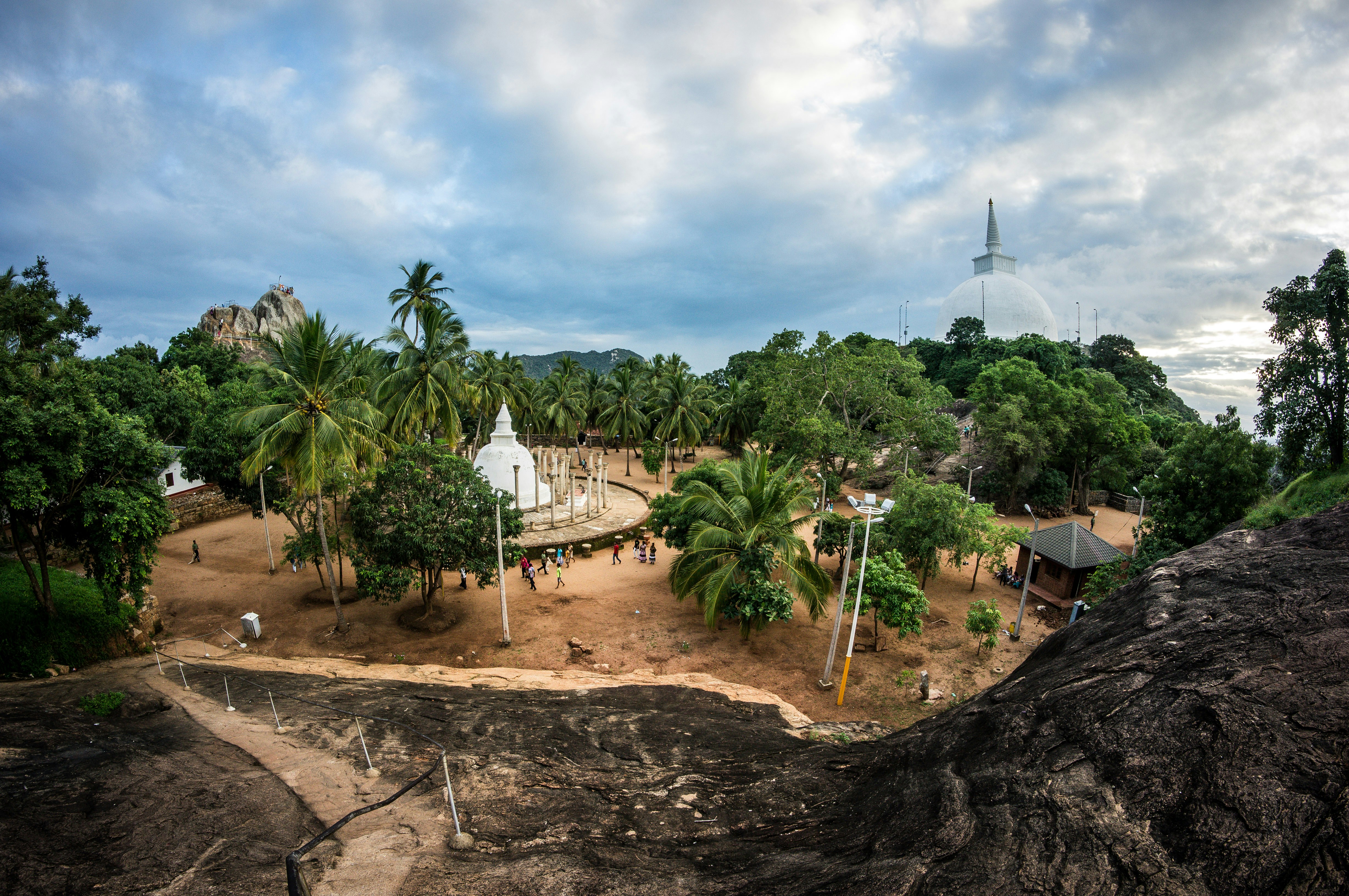
In the third century BCE, Emperor Ashoka sent his own son, Mahinda, from India to Sri Lanka to carry Buddhism across the strait. The story, as Sri Lankan tradition tells it, is almost absurdly small in scale for what it started: King Devanampiya Tissa was out deer hunting on a hill called Mihintale when Mahinda appeared and, essentially, struck up a conversation that ended in the king's conversion. Buddhism has been the island's dominant faith ever since, and Mihintale is still treated as the exact place it happened - a hill covered in stone stairways and stupas, climbed today by pilgrims doing more or less what the king did that afternoon, minus the deer.
The Kingdom in the North
Sri Lanka's history is usually told as one line of Sinhalese kingdoms moving from capital to capital. For several centuries it wasn't. The Jaffna Kingdom, ruled by the Aryacakravarti dynasty, governed the northern peninsula as an independent Tamil kingdom, trading directly with South India and running its own affairs largely separate from the Sinhalese south. It lasted until 1619, when Portuguese forces finally conquered it - the last of the island's independent kingdoms to fall to a European power, decades before Kandy would hold out against all three. Jaffna's own history rarely makes it into an island-wide account of Sri Lanka's past. It deserves to.
A Tooth With Its Own Legend
Buddhism's most sacred relic on the island is a tooth, believed to be the Buddha's own, said to have been smuggled out of Kalinga hidden in the hair of a princess named Hemamala, her husband Prince Danta at her side, after wars threatened the kingdom that had guarded it. It reached Sri Lanka in the fourth century CE and was first enshrined at the Meghagiri Vihara in Anuradhapura, before moving with the island's capital ever since - Polonnaruwa, eventually Kandy, where it remains today inside the Temple of the Sacred Tooth Relic. Sri Lankan kingship was tied to the relic in a way few other objects are tied to any throne: whoever held the tooth, tradition said, held the right to rule. The Esala Perahera, the festival built around it, wasn't always the single procession it is now. King Kirthi Sri Rajasinghe merged the tooth relic's own procession with the separate processions of four Hindu guardian deities : Natha, Vishnu, Kataragama, and Pattini - into one event, a piece of religious diplomacy still performed exactly that way every July and August.
The King Who Built a Fortress Out of Guilt
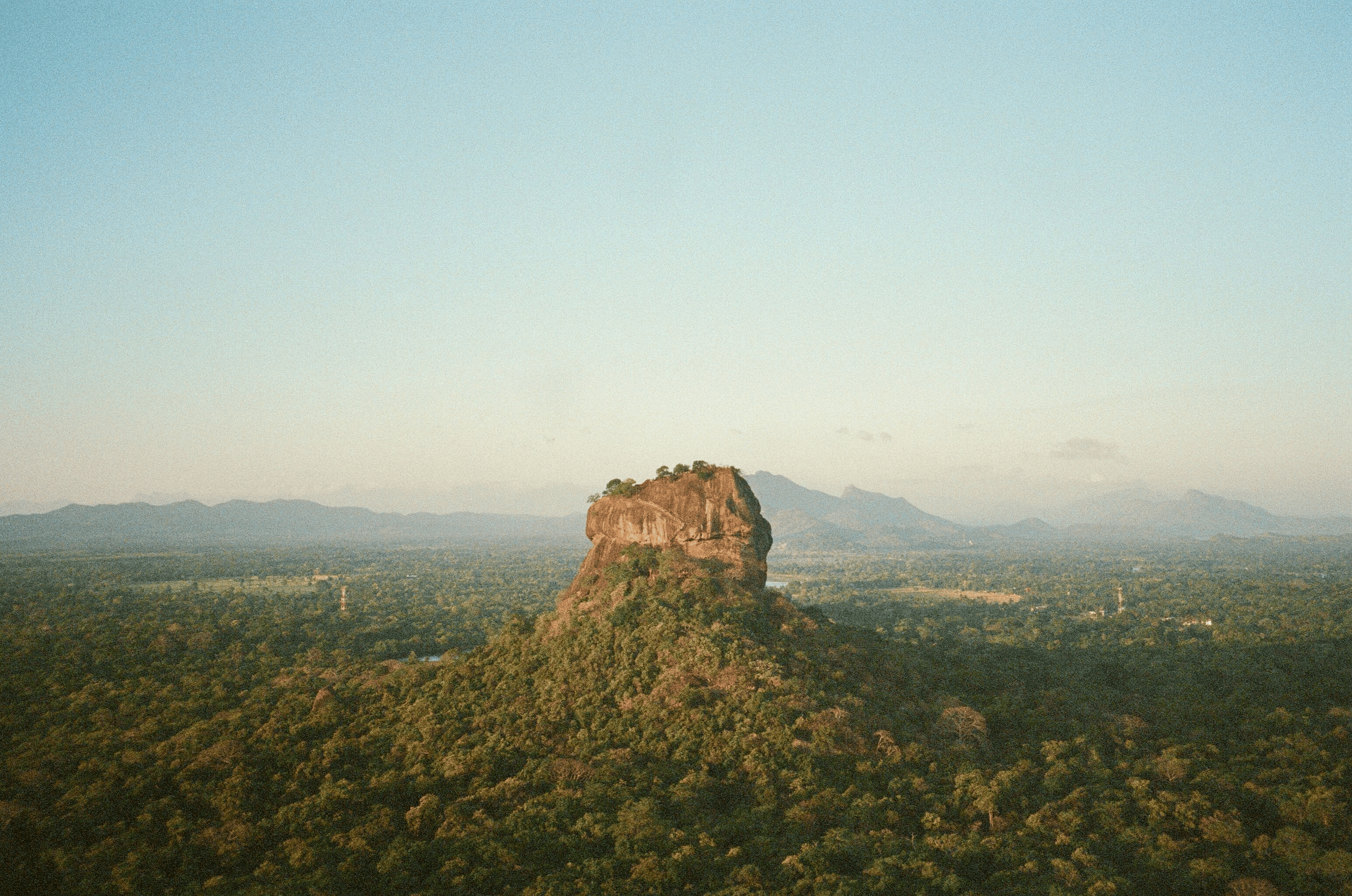
In the fifth century CE, a prince named Kashyapa killed his own father, the king, to seize the throne ahead of his half-brother, the rightful heir. Fearing retaliation, Kashyapa moved his entire capital to the top of a two-hundred-meter granite outcrop and built a palace on the summit, reachable only through a gatehouse carved into the rock in the shape of a giant lion's paws. Along the climb, frescoes of celestial women were painted onto a sheltered rock face, and beside them ran the Mirror Wall, its plaster polished to such a shine that the king could reportedly see his own reflection in it as he passed. Sigiriya stood as Kashyapa's capital for roughly eighteen years before his brother returned with an army and Kashyapa, by most accounts, took his own life rather than face capture. The palace was abandoned, though visitors kept coming for centuries after, leaving behind some 1,800 pieces of graffiti between the sixth and fourteenth centuries, believed to be the oldest continuous graffiti gallery anywhere in the world. The water gardens at the base of the rock, engineered with fountains and underground conduits, still function today, fifteen hundred years on.
What They Came For
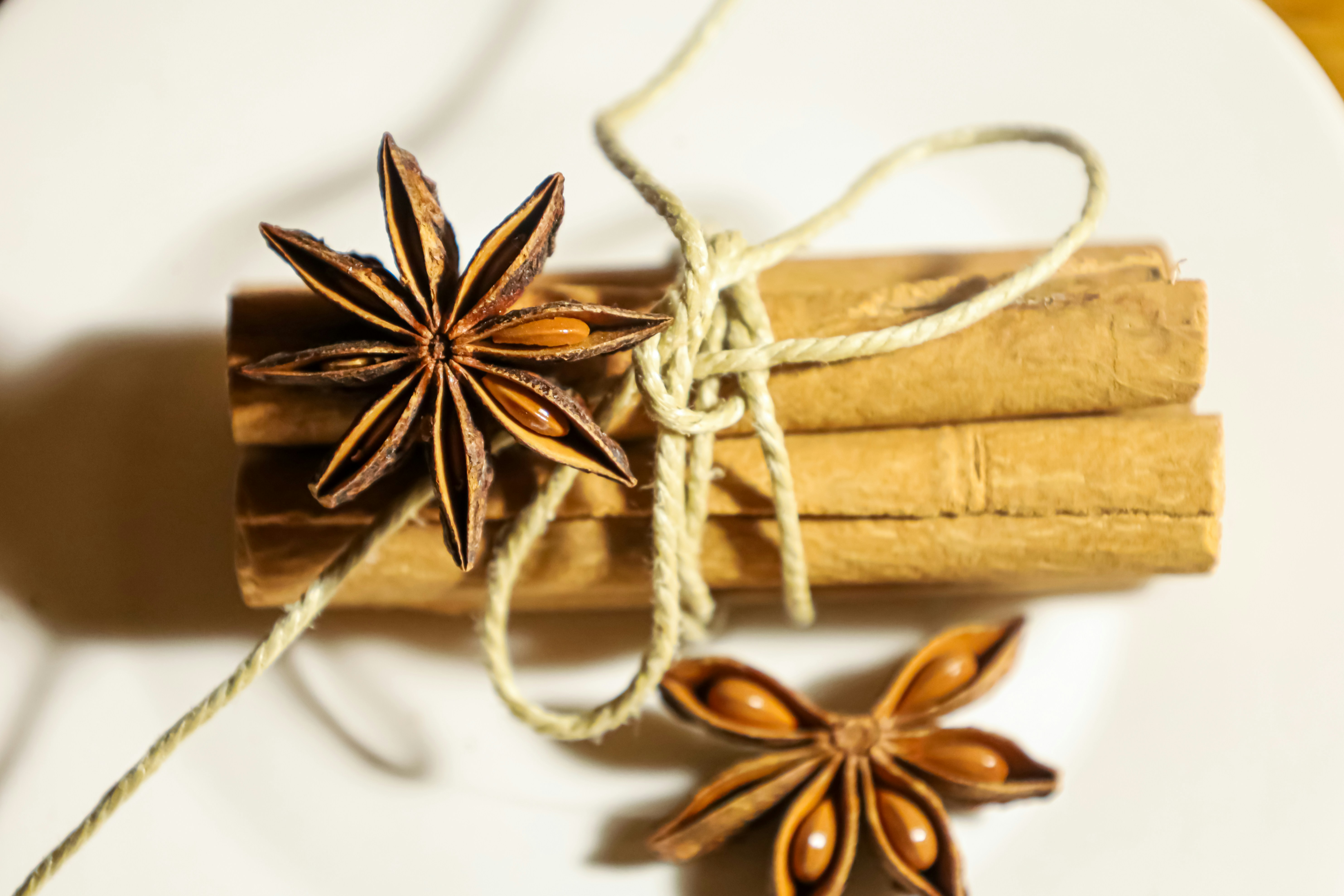
Long before anyone fought over the island itself, they fought over what came out of it. Cinnamon native to Sri Lanka has been traded for roughly four thousand years, used in ancient Egyptian embalming rites, burned in a single extravagant gesture by the Roman emperor Nero at his own wife's funeral, valued by weight above silver in Roman markets. For centuries, Arab traders who controlled the route to Europe protected their monopoly by inventing myths about its source - the Greek historian Herodotus repeated a story that cinnamon was gathered from the nests of giant birds on cliffs no human could reach, guarded by poisonous snakes. A merchant's letter from 1130 CE survives boasting of six thousand pounds of "finest Serendib cinnamon," using the island's old Arab trade name for itself. The same waters held the second prize: the pearl banks of the Gulf of Mannar, fished for over three thousand years, famous enough in antiquity that some accounts tie them to the pearls in the court of King Solomon. Phoenicians, Greeks, Romans, and Arab divers all came for them in turn, the Arab divers eventually settling permanently on the island on the condition they marry Sinhalese women. When European ships finally arrived looking for a sea route to Asia's spices, this was the coastline they were sailing toward.
Three Flags on One Coast
The Portuguese arrived first, in 1505, and by 1518 had permission to build Colombo's first fort. They ringed the coast with strongholds — Galle, Jaffna, Mannar, Negombo, Trincomalee, Batticaloa - and built over a hundred churches, leaving Catholicism as a permanent presence, a wave of Portuguese surnames still common today, and a nickname that's stuck to Negombo ever since: Little Rome, for its density of Catholic churches. At Trincomalee, their fort was built in 1624 using stones taken from the demolished Koneswaram Temple - a detail worth sitting with, not glossing over.
The Dutch arrived next, and their arrival came with a betrayal built in from the start. In 1638 they signed a treaty with the Kingdom of Kandy, promising military help to expel the Portuguese in exchange for a cinnamon monopoly. They delivered on the war and then refused to hand the captured coastal forts back to Kandy, keeping them for themselves. What the Dutch built during their 138 years still does more physical work in Sri Lanka today than anything the Portuguese left standing. Galle Fort as it exists now is substantially their rebuild, granite and coral ramparts raised in 1649 to withstand cannon fire — the same walls that, on December 26, 2004, genuinely held back the Indian Ocean tsunami, sparing the old town while the modern city outside the walls was devastated. In Colombo, the Dutch Hospital, standing since at least 1681, once employed a surgeon named Paul Hermann who spent seven years cataloguing the island's plant life and is still considered the father of Sri Lankan botany. Roman-Dutch law remains part of the country's legal system. The Burghers, a mixed Dutch-Sinhalese community, still exist today. And a canal network built for moving cinnamon still threads through parts of the coastal lowlands.
The Kingdom That Outlasted Two Empires
The Kingdom of Kandy, in the island's mountainous interior, survived the Portuguese and the Dutch by more than three hundred years combined, protected as much by its terrain as by its own resistance. It finally fell to the British in 1815, betrayed rather than defeated. The kingdom's own chiefs, alienated by their king's increasingly erratic rule, handed him over and signed the Kandyan Convention themselves. That king, Sri Vikrama Rajasinha, was originally from the Nayakkar dynasty of Madurai, installed generations earlier through a royal marriage. He died in exile in India. With his capture, a monarchy that had run continuously since roughly the sixth century BCE came to an end in a single afternoon.
What the British Built After
Coffee was the British Ceylon's first cash crop, until a blight in the 1870s wiped out the plantations almost overnight. A Scottish planter named James Taylor had already been experimenting with a backup crop near Kandy since 1867: tea. Within a generation it had remade the central highlands. Nuwara Eliya, founded by the explorer Samuel Baker as a hill retreat for British planters, still carries the nickname it earned then - Little England - complete with mock-Tudor buildings, a lake dug in 1873, and a colonial-era social club that still holds afternoon tea. The railway built to move that tea to port still runs as one of the more scenic passenger lines anywhere in Asia. None of it ran on volunteer labor: tens of thousands of Tamil workers were brought from South India under brutal conditions to work the estates, many walking over a hundred miles inland from the coast on arrival. Their descendants make up a distinct hill-country Tamil community today, a history significant enough to deserve its own fuller telling elsewhere in this Atlas rather than a single line here. British rule ended on February 4, 1948, closing a chapter that had run, in one colonial form or another, for four hundred and forty-three years.
The Train That Ended at the Sea
From 1914, a British-built rail and steamer service called the Boat Mail connected Chennai to Colombo almost seamlessly: a train to Dhanushkodi, on India's southeastern tip, a ferry across the narrow Palk Strait to Talaimannar, and a connecting train onward into Sri Lanka. Engineers on both sides seriously studied building an actual rail bridge across the shallow shoals of Adam's Bridge between the two points; the plan was shelved after the First World War. Dhanushkodi itself carries an older name still & local tradition holds that this is where Rama marked the end of the bridge he built to reach Lanka, and the town's name literally means "end of the bow." The ferry ran for fifty years, carrying mail, Buddhist pilgrims in a dedicated carriage, and thousands of laborers from India headed to the island's new tea estates. On the night of December 22, 1964, a cyclone with winds over 280 kilometers an hour destroyed Dhanushkodi outright, killing close to 1,800 people. The town was declared unfit for habitation. It never officially recovered — and yet roughly 400 fishing families live there still, in the ruins, without electricity or running water, close enough that Sri Lanka's coastline is visible on a clear night.
What the Name Became
Vijaya himself is said to have named the island Tambapanni, "copper-colored," for the shade of its shores. Greek and Roman geographers, including Ptolemy, rendered that name as Taprobane, a word that appeared on maps of the known world for over a thousand years. Arab and Persian traders called it Serendib — the same name behind that 1130 CE cinnamon merchant's letter, and the source of an English word nobody connects back here: in 1754, the writer Horace Walpole coined "serendipity" from a Persian fairy tale about the island's three princes, who kept finding things they weren't looking for. The Portuguese called it Ceilão. The Dutch, Zeilan. The British standardized it into Ceylon, the name that stuck globally through the colonial era and the birth of the tea trade. In 1972, the newly republican nation renamed itself Sri Lanka. Six names, one island, and an English word hiding in plain sight in almost every language that's ever described a stroke of unplanned luck.
Where This Goes, If You Want It To
Sigiriya, Polonnaruwa, and Galle Fort - the Kashyapa story, the medieval capital, and the layered colonial coast , sit inside a single Travigma itinerary, the Cultural Triangle + Coast Signature journey, Sigiriya climbed at dawn before the day's tour groups arrive. The Bespoke tier adds a private Sigiriya ascent and Polonnaruwa explored by bicycle. Kandy's Temple of the Tooth, Mihintale's stone stairway, Nuwara Eliya's tea country and Trincomalee's harbor.