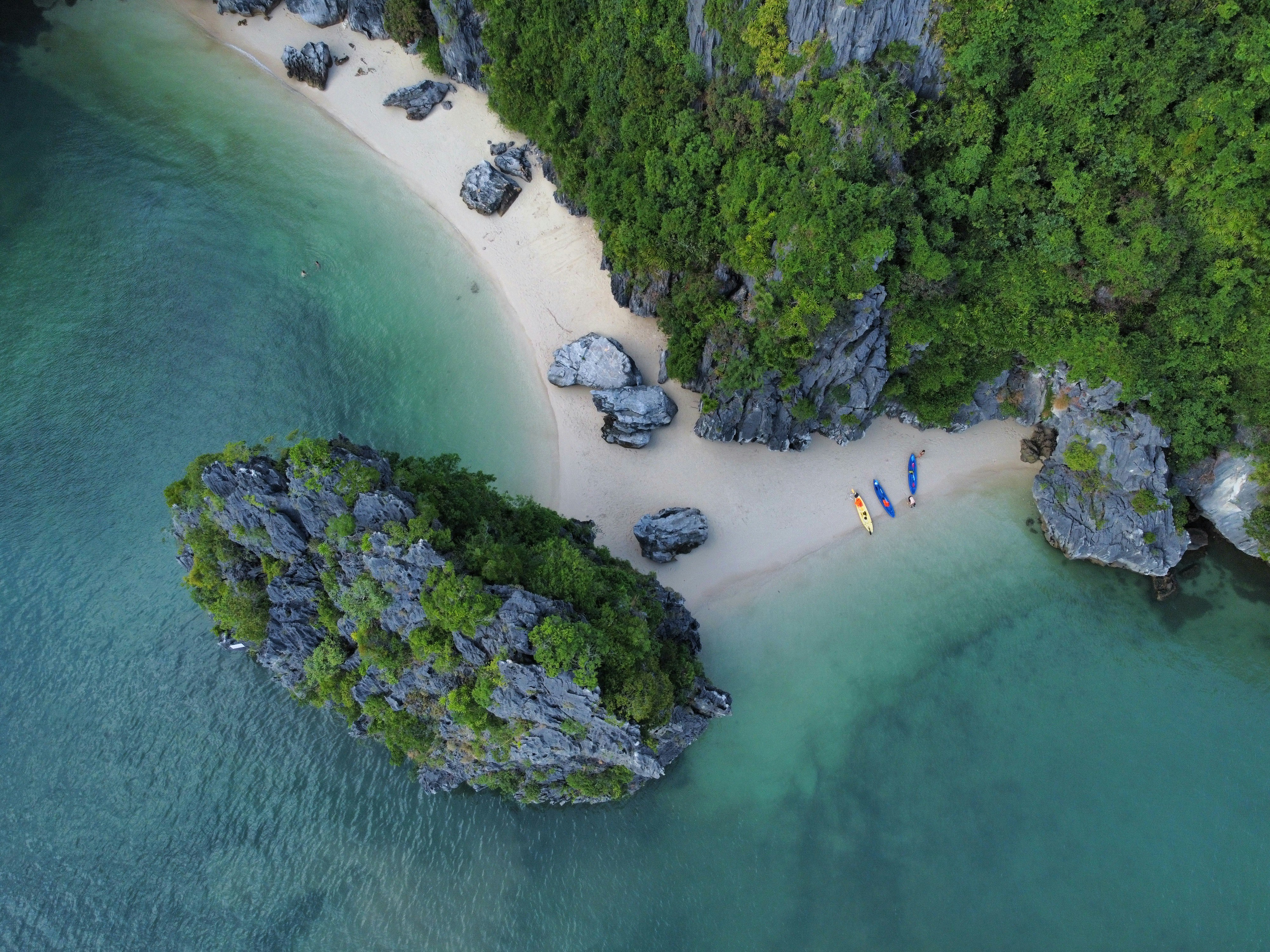
Ha Long Bay. The landscape earns every photograph. The experience of it is a separate question.
The name Ha Long Bay is in every Vietnam itinerary you have ever seen. The photographs too – hundreds of limestone towers rising from an emerald sea, junks anchored at sunset, kayaks threading through cave mouths. It is, by any measure, one of the most photographed landscapes in Southeast Asia.
Lan Ha Bay has no such profile. It sits immediately south of Ha Long Bay, separated by a peninsula, administered by a different province. The limestone formations are identical. The water is the same shade of green. The caves are, if anything, less catalogued and more interesting.
The difference is numbers. Ha Long Bay receives several million visitors a year. Lan Ha Bay receives a fraction of that.
This piece exists to help Indian travellers understand that difference - and decide which version is right for them.
The Geography, Simply Explained
Ha Long Bay and Lan Ha Bay share the same fundamental landscape: the Gulf of Tonkin's karst archipelago, a UNESCO World Heritage Site, formed over millions of years of limestone dissolution and sea-level change.
Ha Long Bay falls under Quang Ninh province. It is the part most visitors reach via the highway from Hanoi to Ha Long City, a four-hour drive that deposits you at a port with hundreds of tour vessels.
Lan Ha Bay sits adjacent, in the Cat Ba Archipelago, administered by Hai Phong. To reach it, you travel via Cat Ba Island - by hydrofoil from Hai Phong, or by road-and-ferry from Hanoi. The journey is marginally more involved. That additional step is, in large part, why the bay remains what it is.
The two are not competing destinations. They are the same destination at different levels of attendance.
What Most Indian Travellers Experience at Ha Long Bay
The standard Ha Long Bay itinerary runs like this: arrive at Ha Long City port, board a two or three-day cruise, anchor at designated spots shared by dozens of other vessels, kayak through appointed cave mouths at appointed times, photograph the same limestone towers from the same angles documented in a thousand travel blogs before you.
None of this is wrong. Ha Long Bay is genuinely extraordinary, the landscape earns every photograph. But the experience of it, as currently delivered to most visitors, is a managed one. The caves are busy. The coves have a boat count. The sunrise you wake up for is watched from a deck surrounded by other decks.
For Indian travellers who have planned carefully and expect the destination to match the effort, this can be a surprise. The landscape delivers. The experience of it, often, does not.
What Lan Ha Bay Actually Offers
Lan Ha Bay has approximately 400 limestone islands. It has a fraction of Ha Long Bay's annual visitor count. On most mornings, particularly outside peak summer and Chinese New Year periods - the water is quiet enough that the only sound is the one the bay itself makes.
The caves here are less catalogued. Some are accessible only by kayak. Some are unnamed on tourist maps. The coral is better preserved. Cat Ba Island, the gateway, has a national park covering half its area - which means the land side of the experience is natural rather than managed tourism infrastructure.
The practical experience: smaller vessels, fewer boats in sight at any given moment, kayaking routes without a queue, mornings where the mist on the water is uninterrupted by other junks.
It is not wilderness. It is a considered alternative to the version that processes millions of visitors a year.
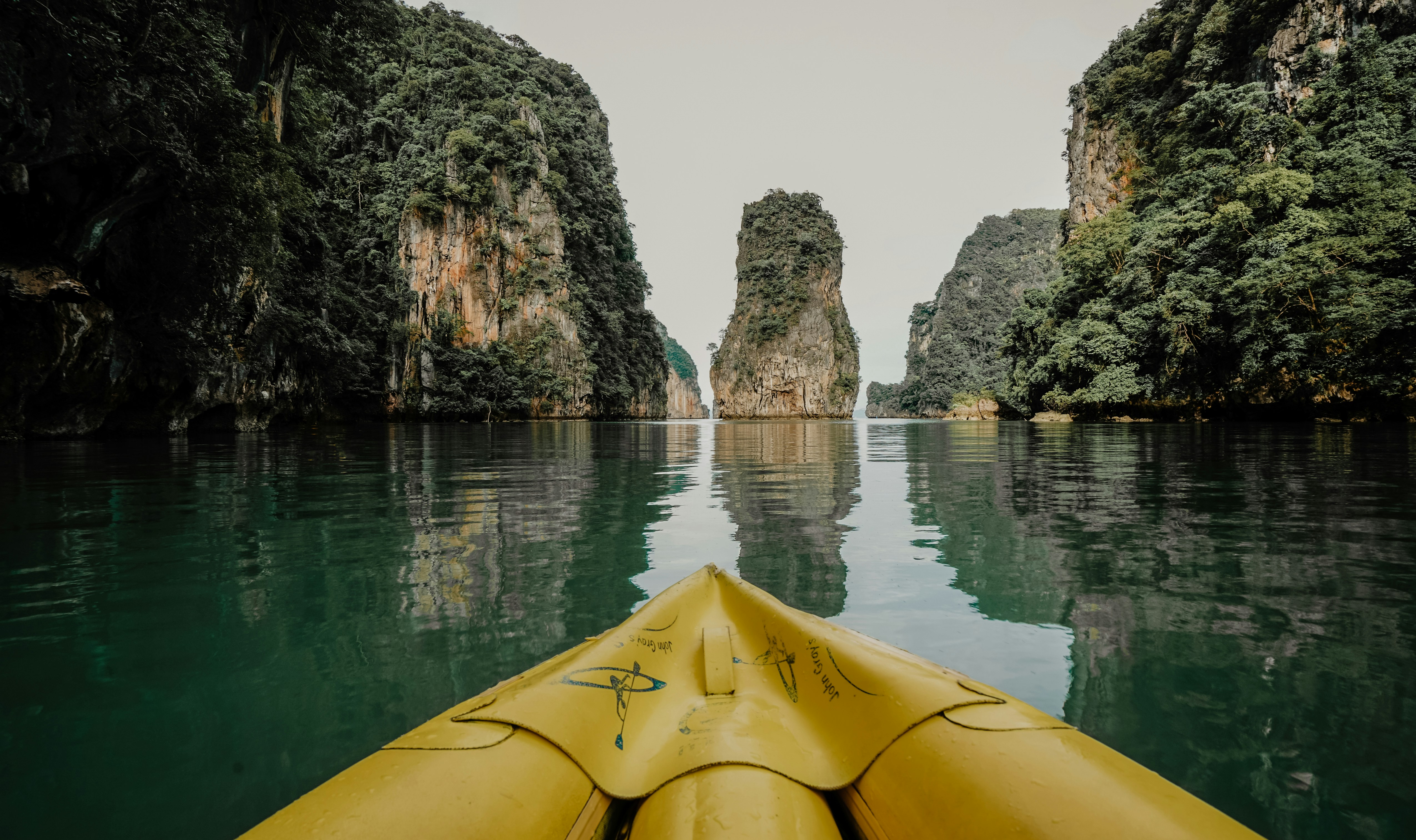
Lan Ha Bay. The caves here are less catalogued. Some are unnamed on tourist maps.
The Practical Comparison
| Factor | Ha Long Bay | Lan Ha Bay |
|---|---|---|
| Access from Hanoi | 4 hrs by road | 3.5 hrs via Hai Phong + hydrofoil |
| Annual visitors | Several million | Significantly fewer |
| Boat density | High - 500+ licensed vessels | Low - far fewer operators |
| Cave quality | Iconic, well-visited | Less catalogued, less crowded |
| Coral | Impacted in high-traffic zones | Better preserved |
| Sunrise experience | Shared with many other vessels | Often private |
| Best for | First-time visitors, easy logistics | Travellers who value experience over convenience |
When Lan Ha Bay Makes More Sense
If you are travelling as a couple or a family and the quality of the experience matters more than the simplicity of logistics, Lan Ha Bay is the correct choice. The additional travel - the hydrofoil to Cat Ba, the smaller operator network, is a half-day consideration that returns dividends across two or three days on the water.
If this is your first time in Vietnam and your itinerary is tight, the additional routing may not make sense. Ha Long Bay remains worth visiting on its own terms.
If you have been to Ha Long Bay before and came back with a question, why didn't it feel the way I expected it to - Lan Ha Bay is the answer.
The Timing Question
March to May is the clearest window- lower humidity, good visibility, temperatures in the low twenties. April and May offer good weather alongside lighter domestic Vietnamese tourism.
September to November is the second window, after the summer monsoon. The water is warmer, visibility is good, and the post-peak quiet means Lan Ha Bay's advantage is at its most pronounced.
June through August is humid and occasionally stormy. The bay is at its most crowded in late July and August.
December through February is cooler and often misty. The mist can be beautiful. It can also reduce visibility significantly. Travel with that expectation in place.
How Indian Travellers Actually Get There
The routing that works: Hanoi arrival → overnight in Hanoi → morning transfer to Hai Phong by private vehicle → hydrofoil to Cat Ba Island → board your vessel at Ben Beo Harbour.
Cat Ba Island is worth half a day in its own right, the national park, the town's seafood market, the viewpoints that look across to the bay you are about to spend two days on.
The return mirrors the outbound. The entire loop runs without re-entering Ha Long City at any point.
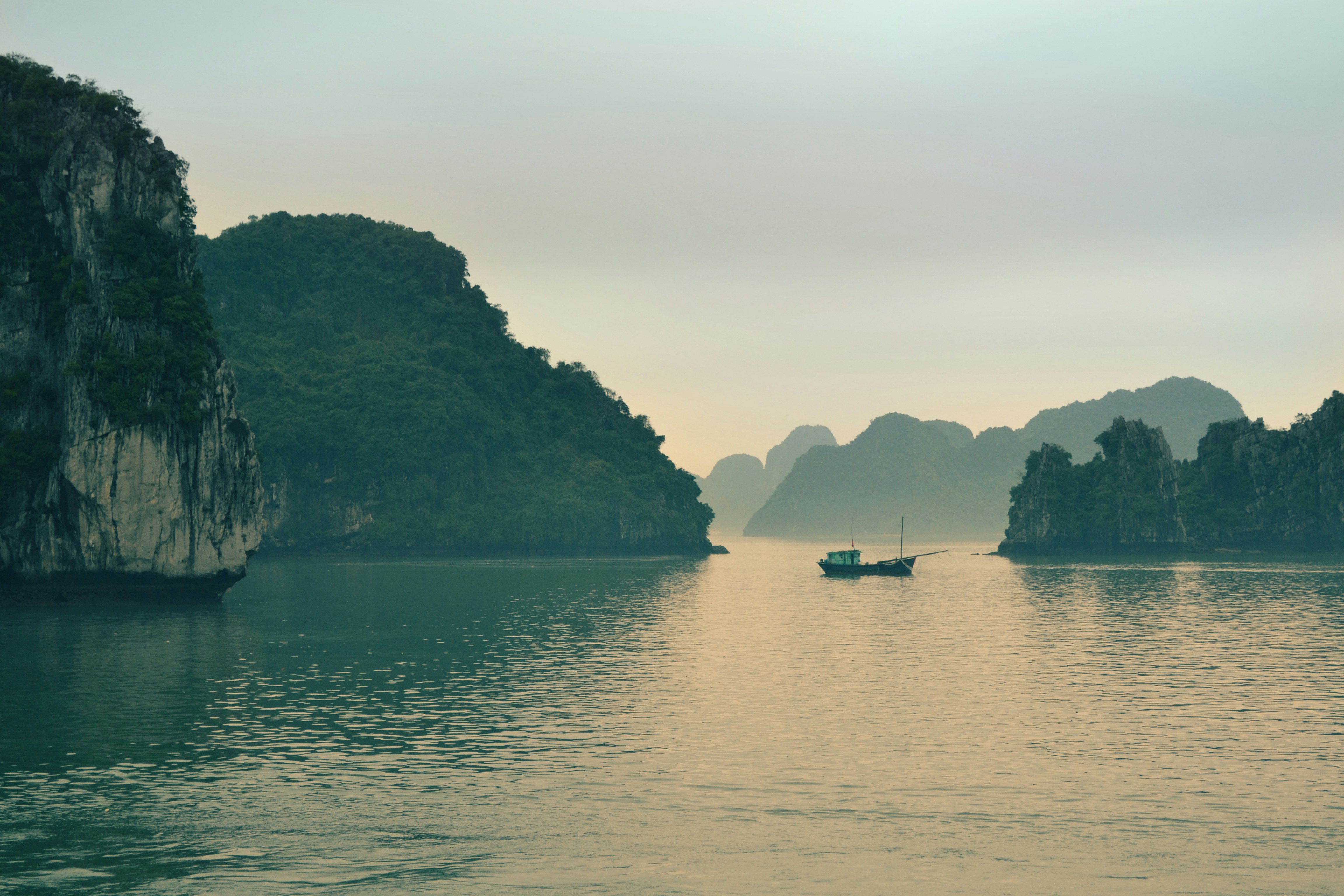
The second morning. The first time in months with nowhere to be..
The Honest Summary
Ha Long Bay is one of the great landscapes of Southeast Asia. It is also a heavily visited UNESCO site that processes its visitors efficiently and at scale.
Lan Ha Bay is the same landscape with fewer people on it. The effort to reach it over Ha Long Bay is approximately three additional hours of logistics. The return on that effort- in terms of what you actually experience on the water - is disproportionate.
For Indian travellers who have planned carefully and expect the destination to match that effort, the choice between these two bays is not particularly close.
Planning a Vietnam trip?
Travigma builds private, curated itineraries for Indian travellers — from airport pickup to the right hour on the right bay.
DM 'VIETNAM' on Instagram at @travigma.official · or email us at [email protected]